




TripMemo Product Team
Product & releases
8 min read•Published
Summary
Choose layflat when wide views matter most: its pages open completely flat, so a photo can run across both pages with no fold, on thick lustre paper. Choose a hardcover for most trips: it holds far more pages, comes in portrait, compact and square sizes, costs less, and suits a long holiday or a gift. In TripMemo's studio a hardcover runs 24 to 298 pages and a layflat 18 to 120, and the hardcover costs less at every size.
Choose layflat if your best photos are wide views you want across two pages; choose a hardcover for almost everything else. A layflat book's pages open completely flat, so a panorama runs across the spread with no fold in the middle, on thick, heavy pages. A hardcover's pages curve into the spine like any hardback, but it holds far more pages, comes in more sizes and costs less, which is why it is the book most people choose for a holiday.
That is the short answer. Below is the full comparison: how each binding opens, how many pages each holds, the paper, sizes, covers, price and delivery, with the trips each one suits. We make layflat photo books and hardcover photo books, so the specifications are from the TripMemo studio, but the trade-offs are the same at any photo book maker.
Layflat vs Hardcover at a Glance
| Hardcover | Layflat | |
|---|---|---|
| How it opens | Like a classic book: pages curve into the spine | Completely flat, edge to edge across both pages |
| Photo across two pages | Possible, with a dip in the middle | Seamless, no fold |
| Pages | 24 to 298 | 18 to 120 |
| Paper | 200gsm gloss photo paper | 190gsm lustre photo paper |
| Shapes and sizes | Portrait 21 × 29.7 cm or 14.8 × 21 cm; square 21 × 21 cm | Landscape 29.7 × 21 cm; square 21 × 21 cm |
| Spine at 100 pages | About 13 mm | About 24 mm |
| Illustrated covers | Every size | Square size only |
| Price | Lower at every size | Higher at every size |
| Delivery time | About the same as layflat | About the same as hardcover |
| Best for | Most trips, long trips, gifts, a shelf of books | Panoramas, landscapes, one big trip |
Today's starting price for each binding and the delivery times are kept up to date in the photo book facts. Extra pages and larger sizes add to the price, and delivery is priced for your address at checkout.
How Each Binding Opens
The difference you notice first is the middle of the book.
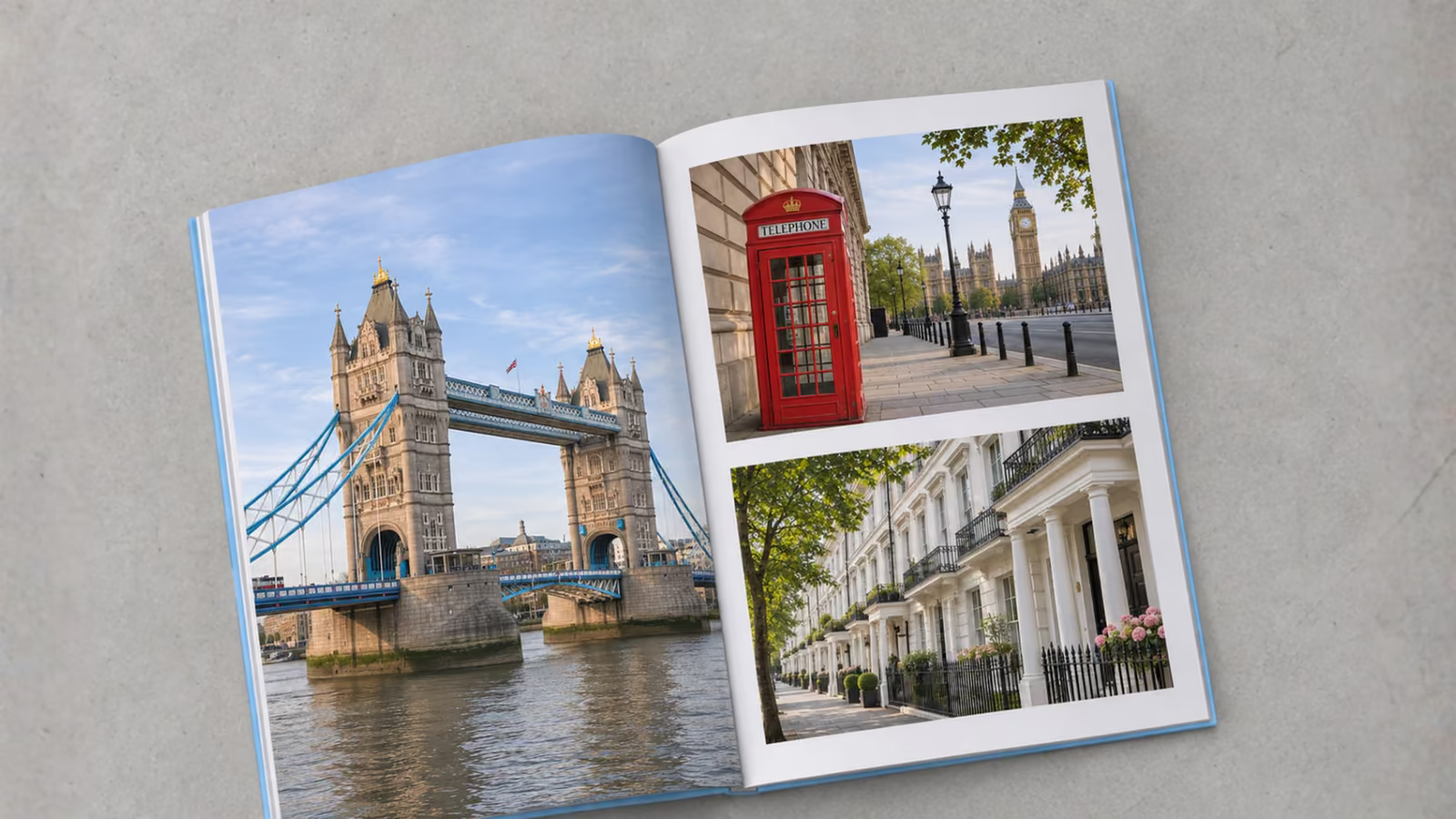
A hardcover is bound like most hardback books. The pages curve gently into the spine, so the inner edge of each page bends away from you. A photo printed across two pages still works, but whatever sits in the centre (a face, a church tower, the horizon's best point) drops into the curve. Good hardcover layouts keep wide photos on one page, or place them so the fold falls somewhere quiet, such as sky or water.
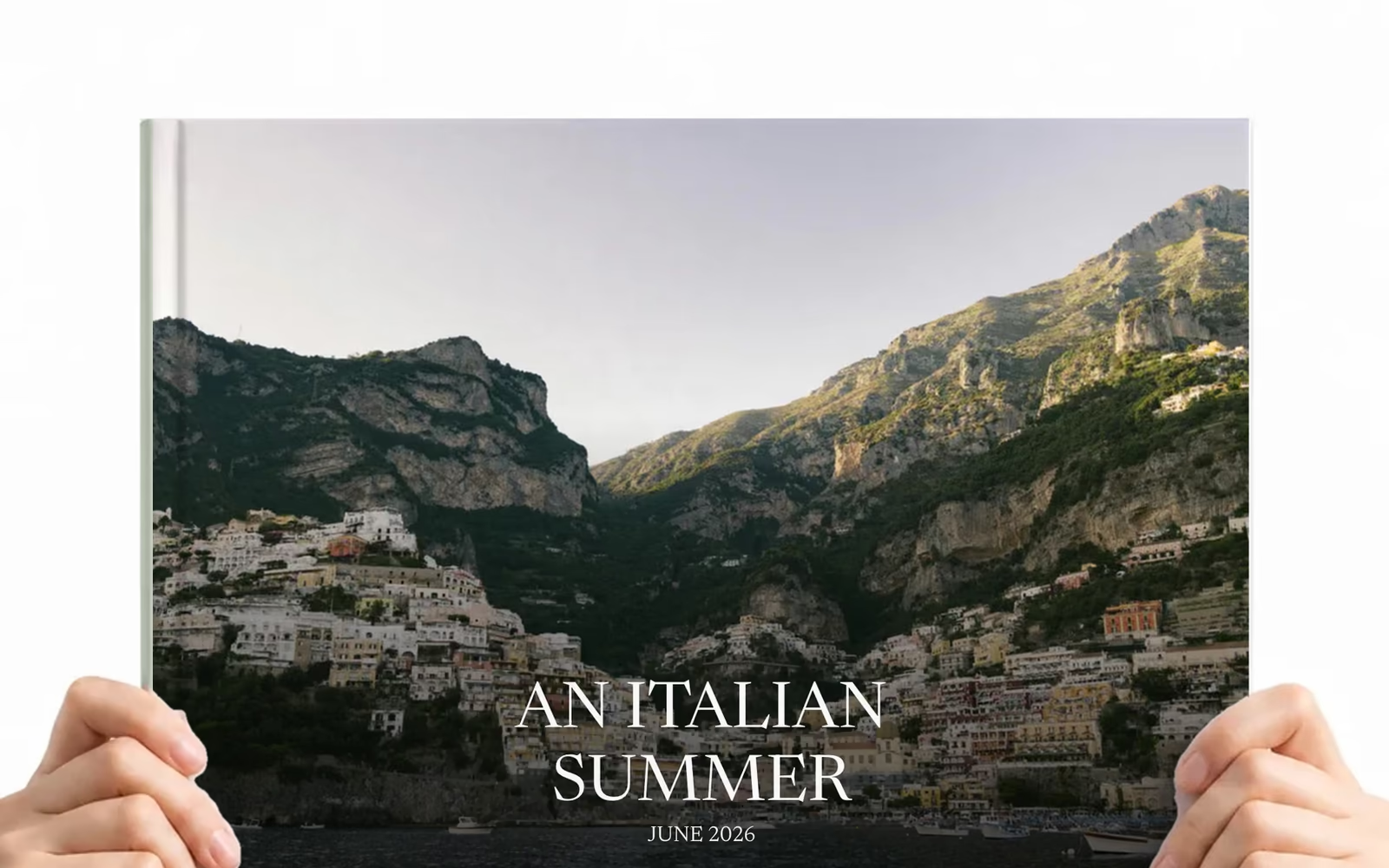
A layflat is made so the spread lies completely flat when the book is open. A panorama can run edge to edge across both pages with nothing lost in the middle, and a two-page photo looks like one large print. That is the whole reason to choose it.
Pages, Thickness and Weight
Layflat pages are much heavier than hardcover pages, which changes how many fit in a book.
- Hardcover: 24 to 298 pages. The spine is about 8 mm at 24 pages, 13 mm at 100 pages and 28 mm at 298.
- Layflat: 18 to 120 pages. The spine is about 10 mm at 18 pages, 24 mm at 100 pages and 28 mm at 120.
So a full 120-page layflat is roughly as thick as a 298-page hardcover. Even a short layflat feels substantial in the hand, but it holds a tight edit of the trip, not every photo from it. If you have 300 photos you love from a three-week trip, a hardcover will hold them; a layflat asks you to choose your best 150 or so. Our guide to how many photos go in a photo book works out the page count for either.
Paper: Gloss vs Lustre
In TripMemo books the two bindings use different paper:
- Hardcover: 200gsm gloss photo paper. Rich colour and contrast, and the heaviest paper of the three TripMemo books.
- Layflat: 190gsm lustre photo paper. A soft satin sheen rather than a high gloss, so a spread lying open on a table shows fewer reflections.
Neither is better in general. Gloss suits bright colour and night shots; lustre suits big landscapes viewed flat under room light.
Join the TripMemo
Newsletter
Unsubscribe anytime. Read our privacy policy.
Shapes, Sizes and Covers
Hardcover comes in portrait (Classic 21 × 29.7 cm or Compact 14.8 × 21 cm) and Square (21 × 21 cm). Portrait suits a mix of people and places, Compact is easy to give and to post, and Square treats portrait and landscape photos equally.
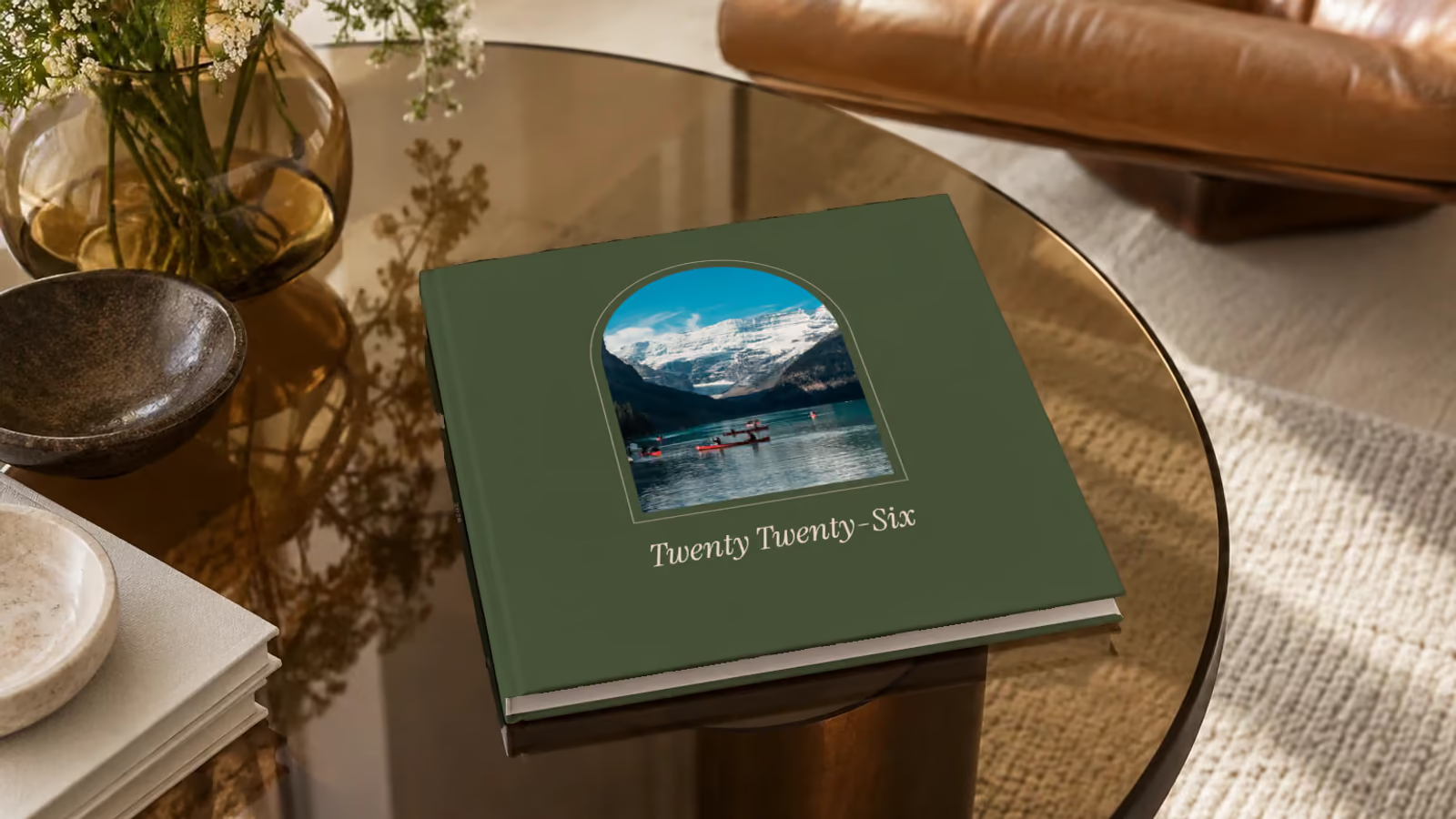
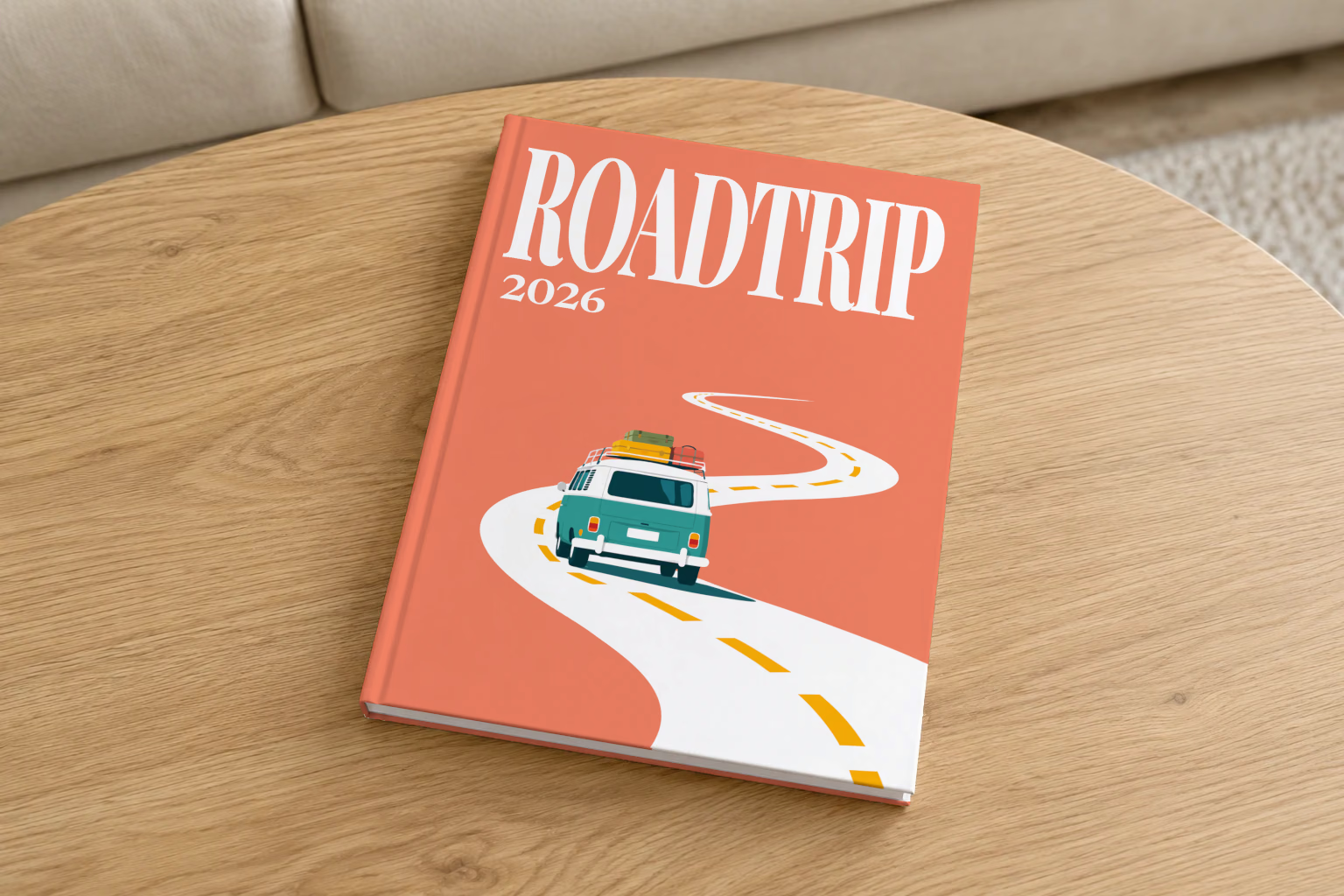
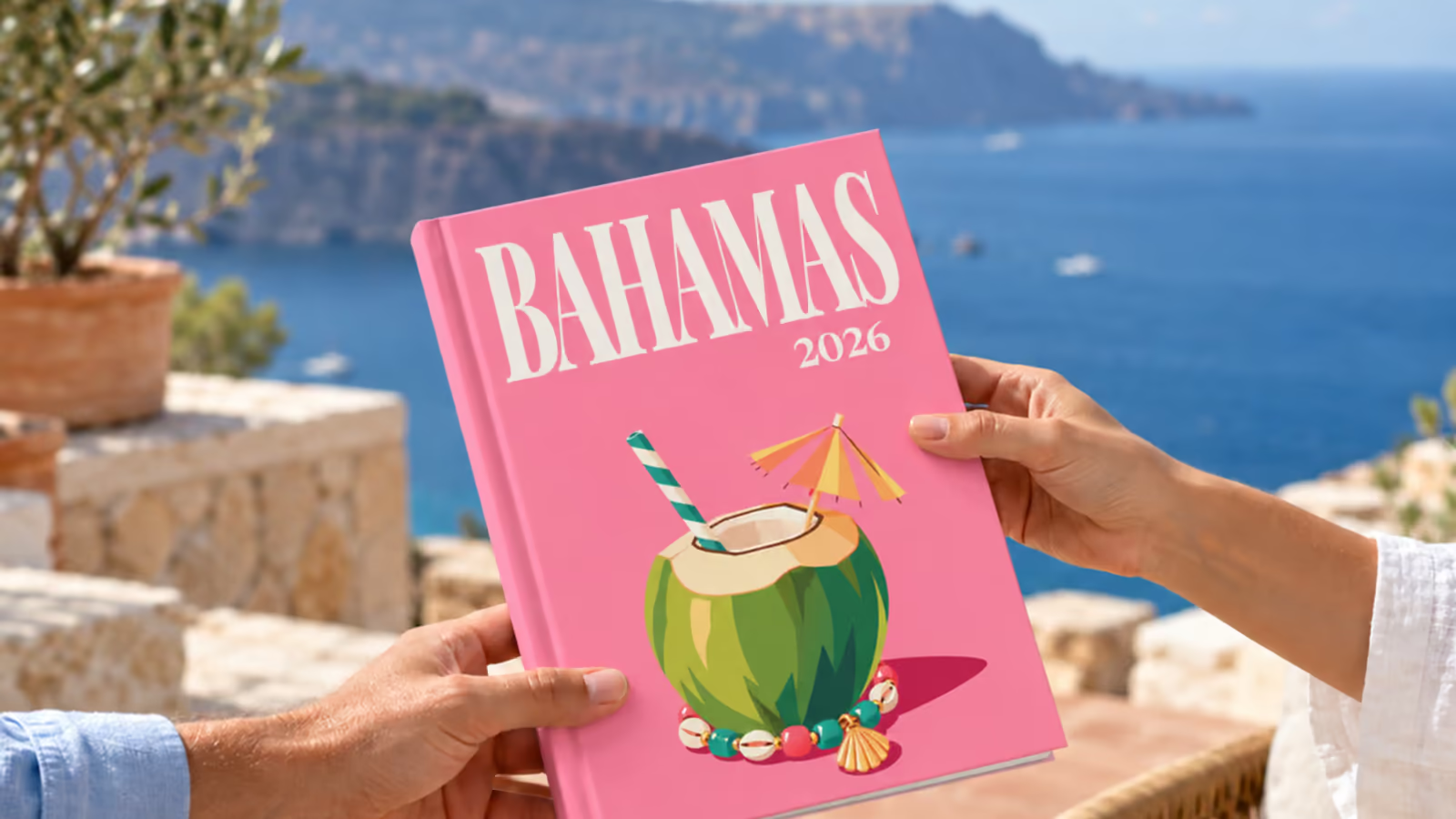
Layflat comes in landscape (Classic 29.7 × 21 cm) and Square (21 × 21 cm), with no portrait option. The landscape book gives a panorama the most room and takes a photo cover; illustrated covers print on the square layflat.
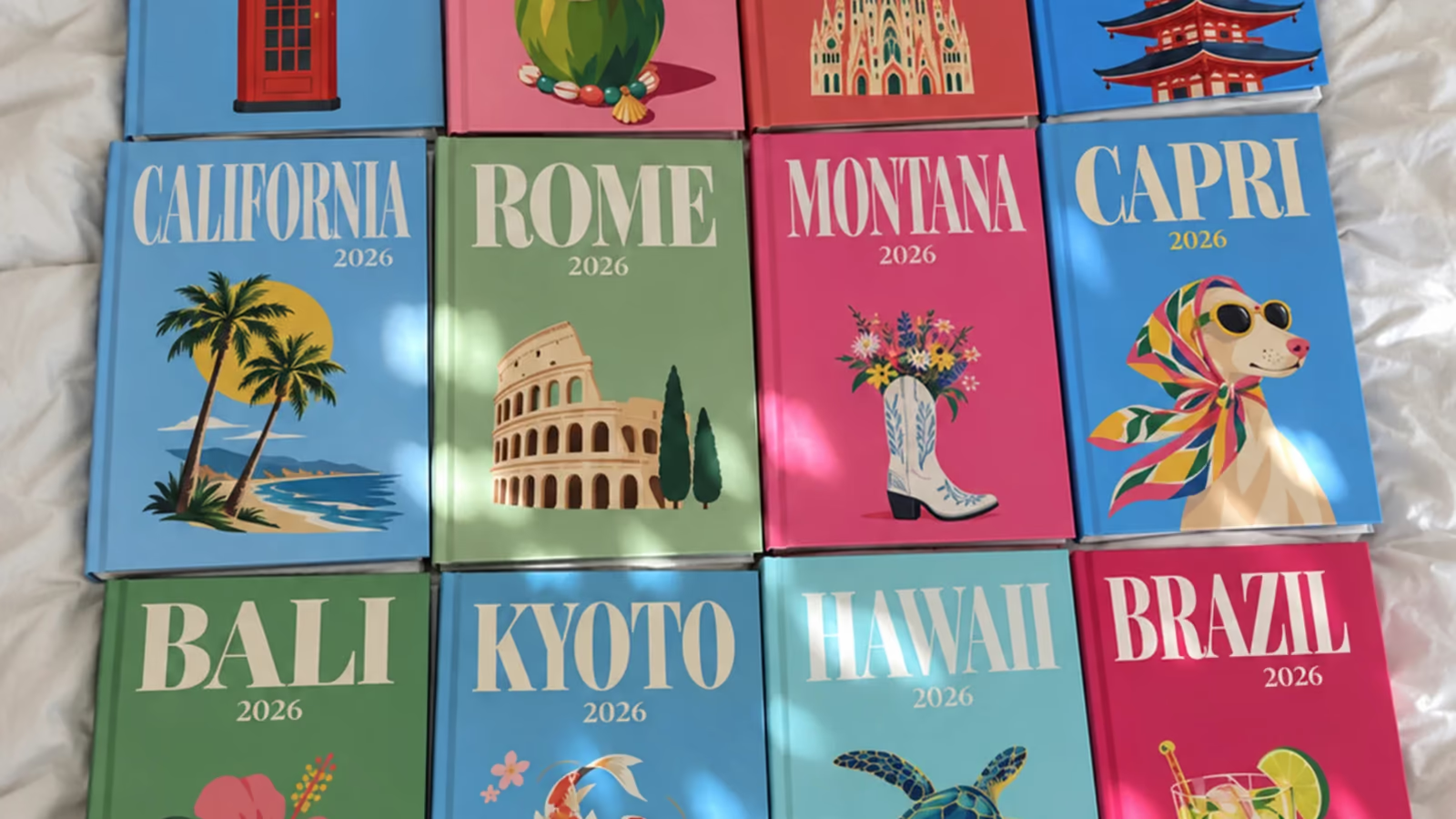
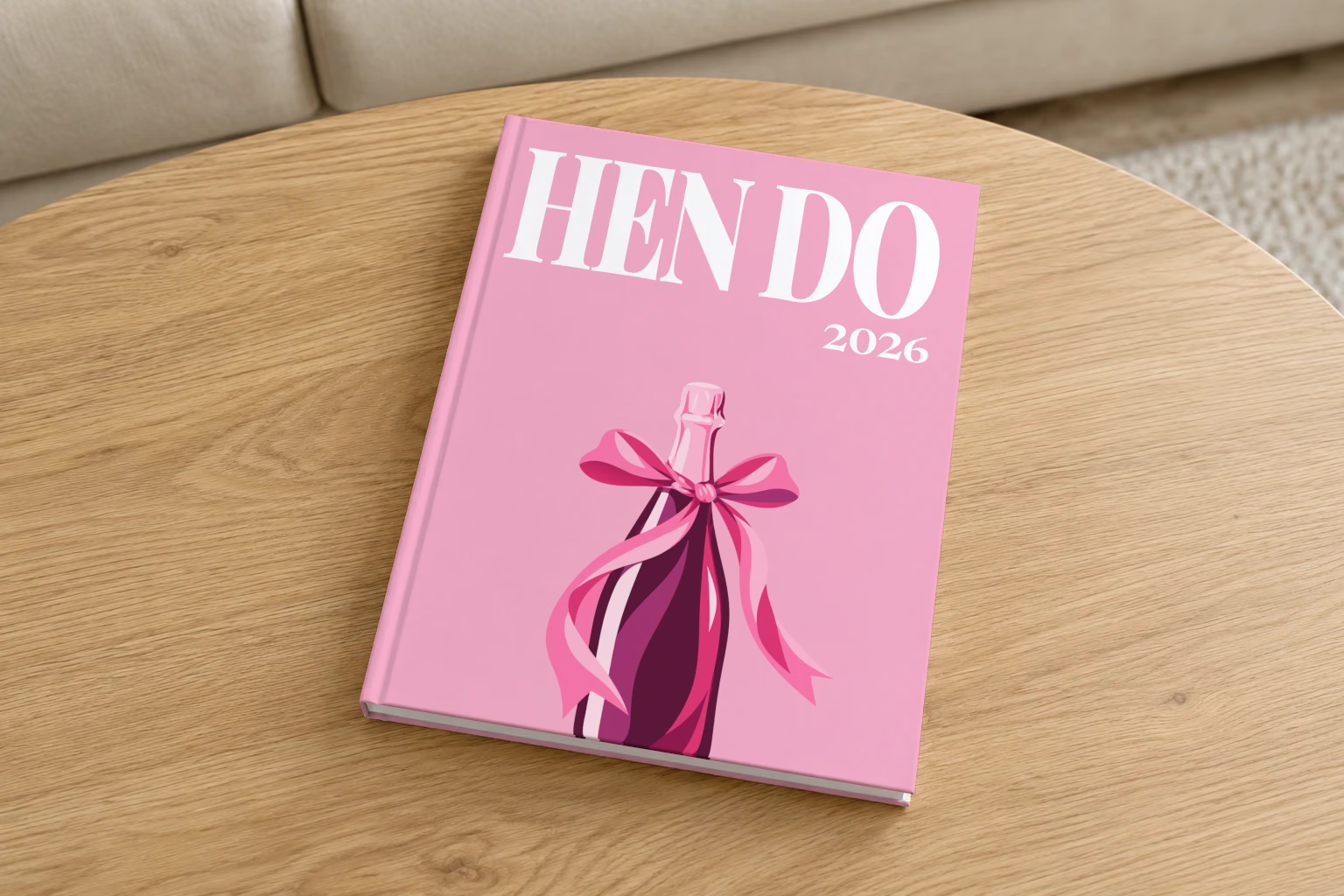
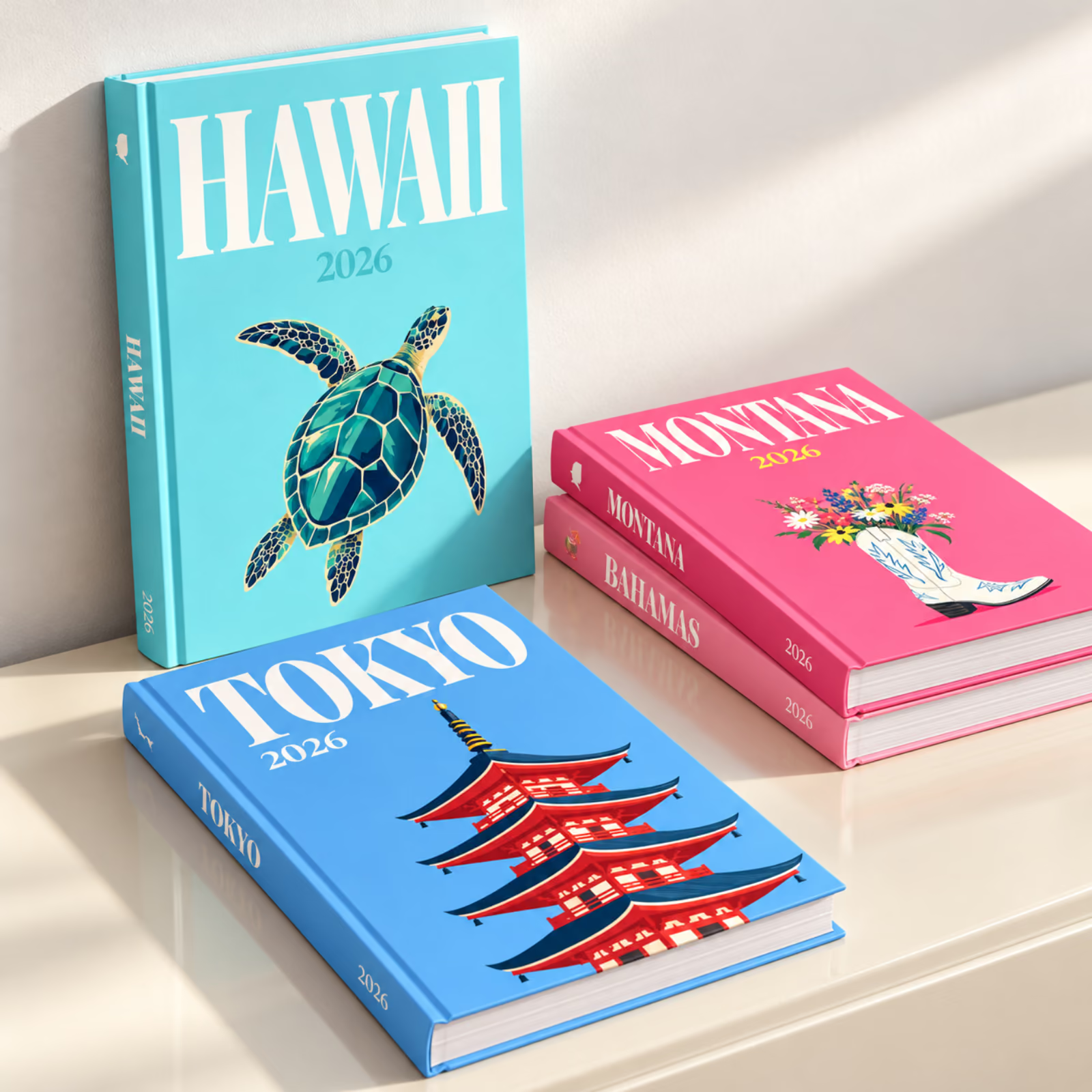
Every cover in the illustrated cover library prints on any hardcover size, so if you have your heart set on a particular illustrated cover in a portrait shape, that decides it.
Price and Delivery
Layflat costs more at every size, because of the binding and the heavier pages. The starting price of each, before delivery, is listed in the photo book facts. Delivery to a UK address is also higher for a layflat, and both are shown at checkout before you pay.
Both are printed to order and take about the same time to arrive; the photo book facts give the current delivery times. If the book is a Christmas present, check the Christmas photo book delivery dates, which list each binding separately.
Which One Suits Your Trip?
| Your trip | Our pick | Why |
|---|---|---|
| A safari, a national park or a mountain trip | Layflat | Wide landscapes and wildlife scenes across a spread |
| A honeymoon somewhere spectacular | Layflat or hardcover | Layflat for views; hardcover if you have lots of photos of the two of you |
| A road trip | Hardcover | Many days and stops, with a route map near the start |
| A city break or long weekend | Hardcover (or softcover) | Streets, food and people, two to four photos per page |
| A family holiday | Hardcover | Lots of people, lots of pages, easy to give |
| A gap year or a year of travel | Hardcover | Up to 298 pages; layflat stops at 120 |
| A gift for parents | Hardcover, compact or classic | Lighter, lower price, room for more of the trip |
The theme pages go further for specific trips: safari photo books and beach holiday photo books both suit layflat spreads, and a honeymoon photo book works in either.




Your trip, printed.Start it in the TripMemo app.

Is Layflat Worth It?
Ask one question: how many of your favourite photos only work big? If you can name five or more that need two pages (a coastline, a skyline, a herd crossing a plain), the flat spread will make the book, and layflat is worth the extra. If your favourites are people, food and street scenes that fit on one page, a hardcover shows them just as well, holds more of the trip and costs less.
There is a middle route too: choose a square hardcover and give the wide photos a full single page each, with a white border. You lose the seamless spread, but you keep the page count and the price.
Comparing Photo Book Makers, Not Just Bindings?
Layflat books vary a lot between makers in page count, paper and price. We compared them side by side in the best layflat photo book, and travel photo books in general in the best travel photo book.
Whichever you choose, the layout advice is the same: open each spread with your strongest photo, vary one to four photos per page, and check every page before you order. Our guide to making a travel photo book covers that step by step.
Frequently Asked Questions
What is the difference between a layflat and a hardcover photo book?
A layflat's pages open completely flat, so a photo can cross both pages without a fold. A hardcover's pages curve into the spine. Layflat pages are thicker, so it holds fewer pages and costs more.
Is a layflat photo book worth it?
Yes when the trip is about wide views you want across two pages. For portraits, food and streets, a hardcover shows them as well for less.
Can a hardcover photo book have photos across two pages?
Yes, but the middle curves into the spine, so keep faces and the focal point away from the centre.
Which holds more pages, layflat or hardcover?
Hardcover: 24 to 298 pages in the TripMemo studio, against 18 to 120 for layflat.
Is layflat paper different from hardcover paper?
In TripMemo books, hardcover is 200gsm gloss and layflat is 190gsm lustre, which shows fewer reflections when open.
Which is better as a gift?
Usually a hardcover: more pages, a compact size and a lower price. A layflat suits one big trip with spectacular scenery.