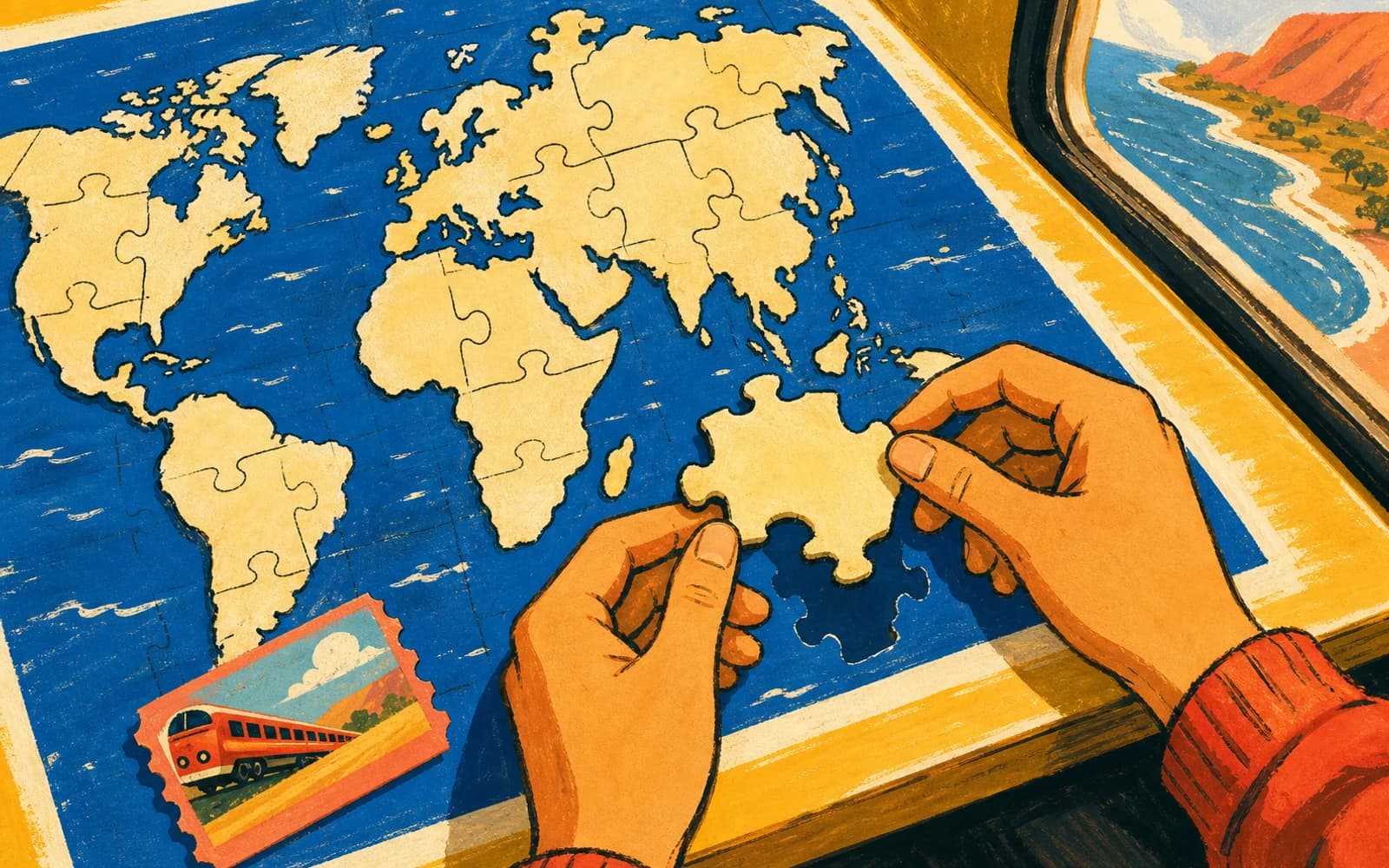
Hands completing an illustrated world map jigsaw puzzle during a train journey

World Map
Jigsaw Puzzle

A free online geography puzzle.

Start the puzzleFree · 4 levels

Start the puzzle.

Drag a misplaced piece onto another to swap them. On a phone, tapping two pieces works just as well.

Explorer · 9 pieces

Time

0:00

Moves

0

Drag a piece onto another—or tap two—to swap them.

Physical map imagery: NASA Blue Marble

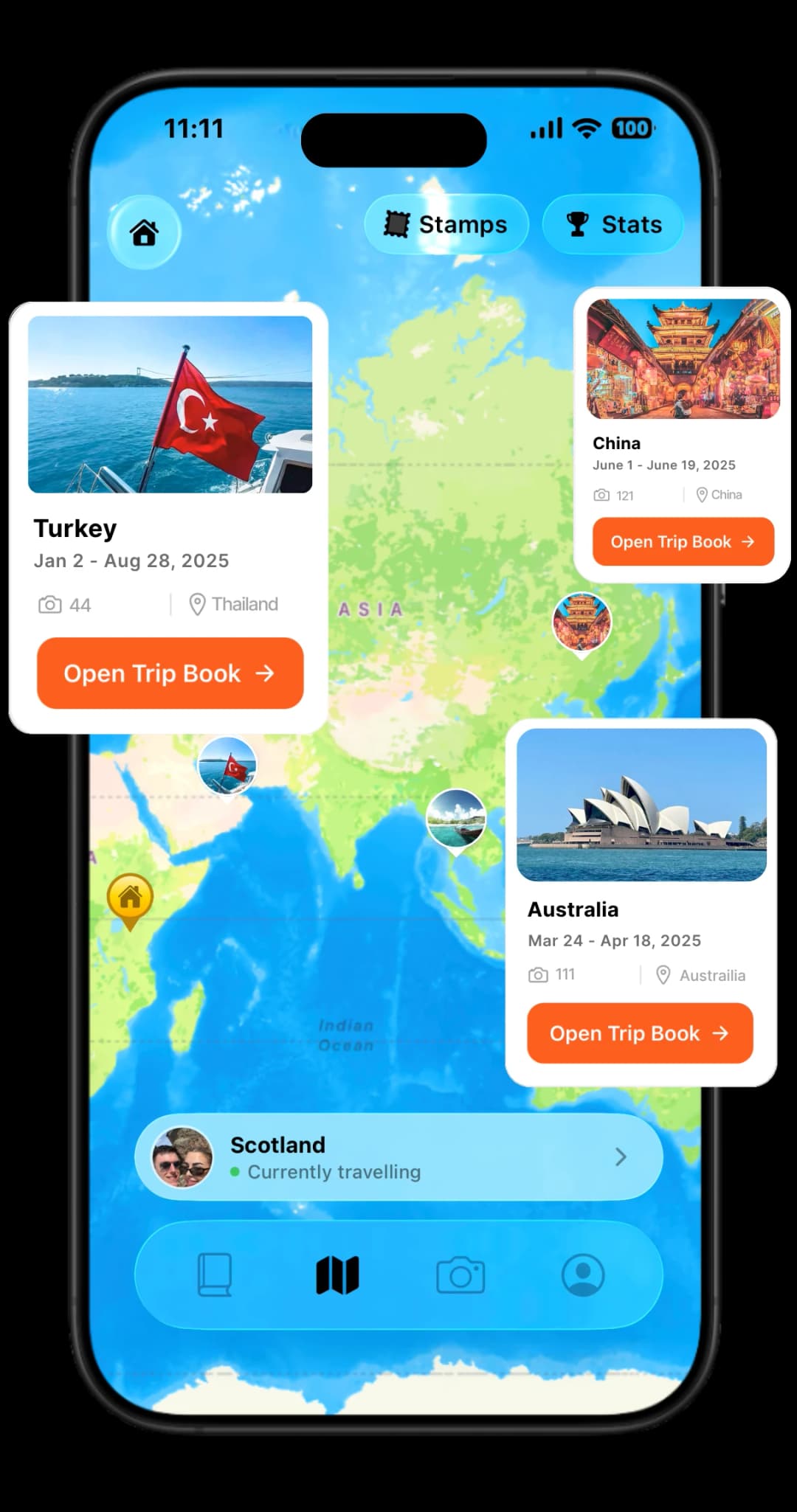
TripMemo map showing visited places
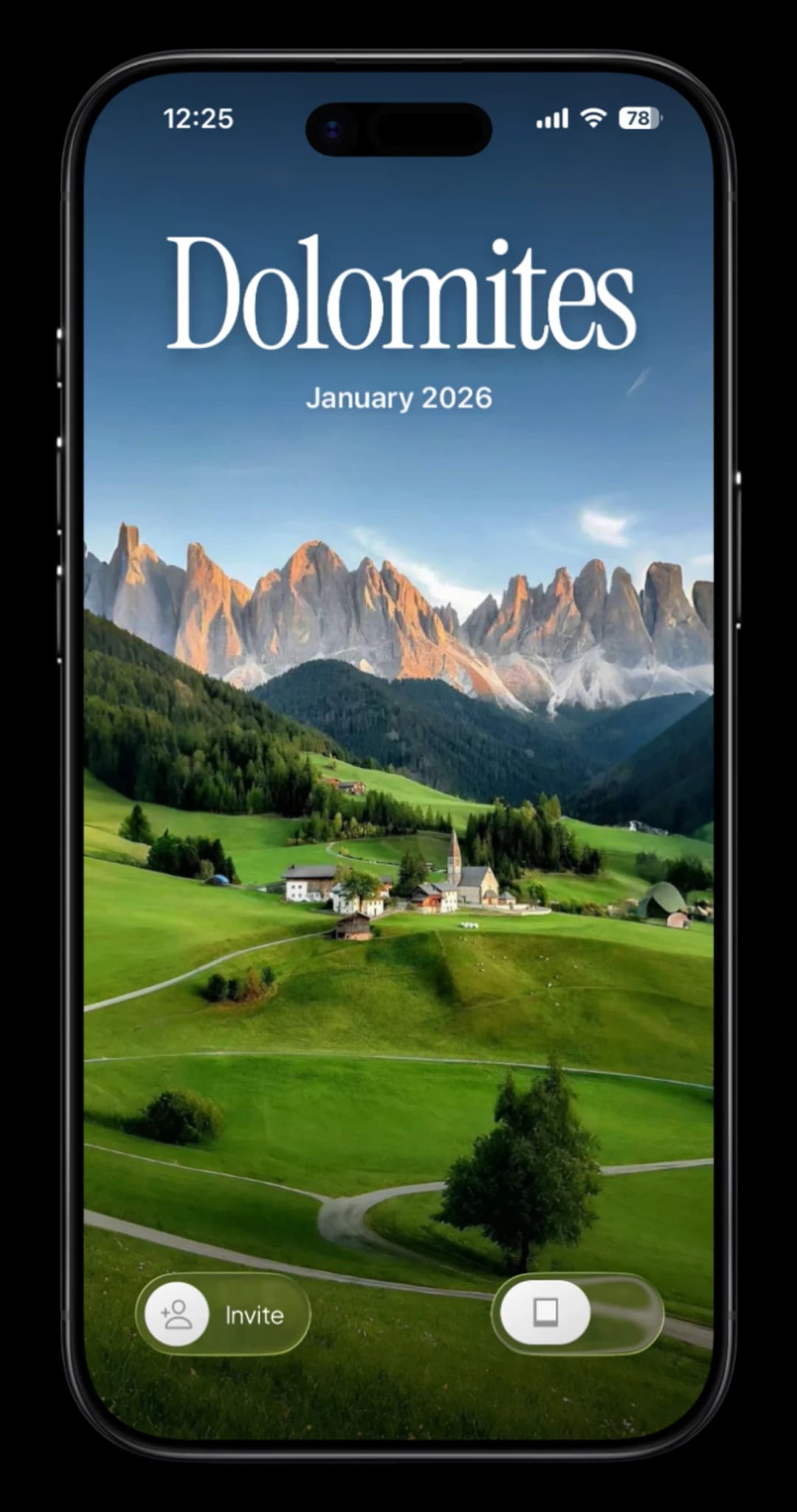
TripMemo digital tripbook cover
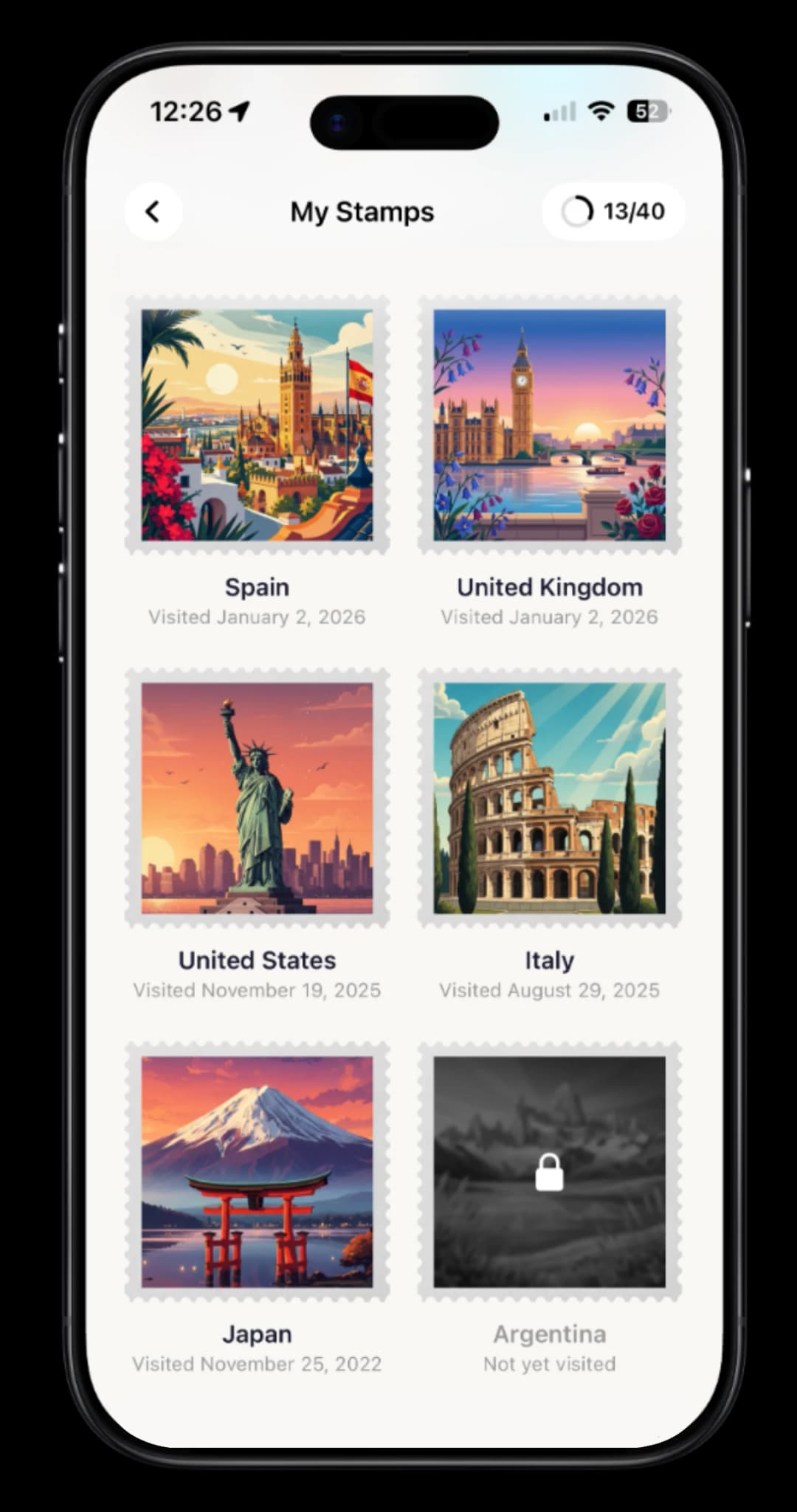
TripMemo travel stamps collection

Join thousands of travellers

TripMemo is a digital travel journal for your routes,photos and daily memories.Every trip becomes a story worth returning to.

TripMemo
Get the app

See the world
as shapes that connect.

There are no country prompts to answer. Coastlines, oceans and continental proportions guide every move, building visual memory as the map comes together.

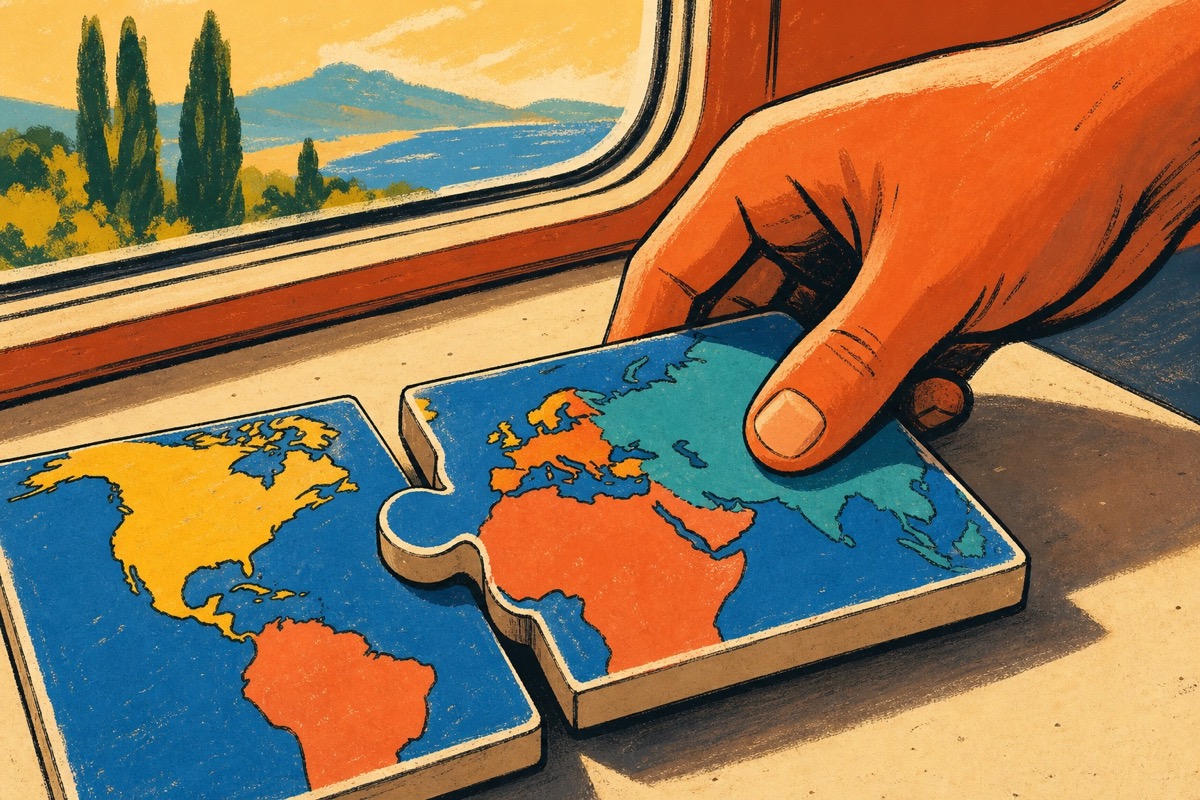
Hand sliding two illustrated world map puzzle tiles together on a train table

Natural on touch

Drag a tile or tap any two pieces to swap them.

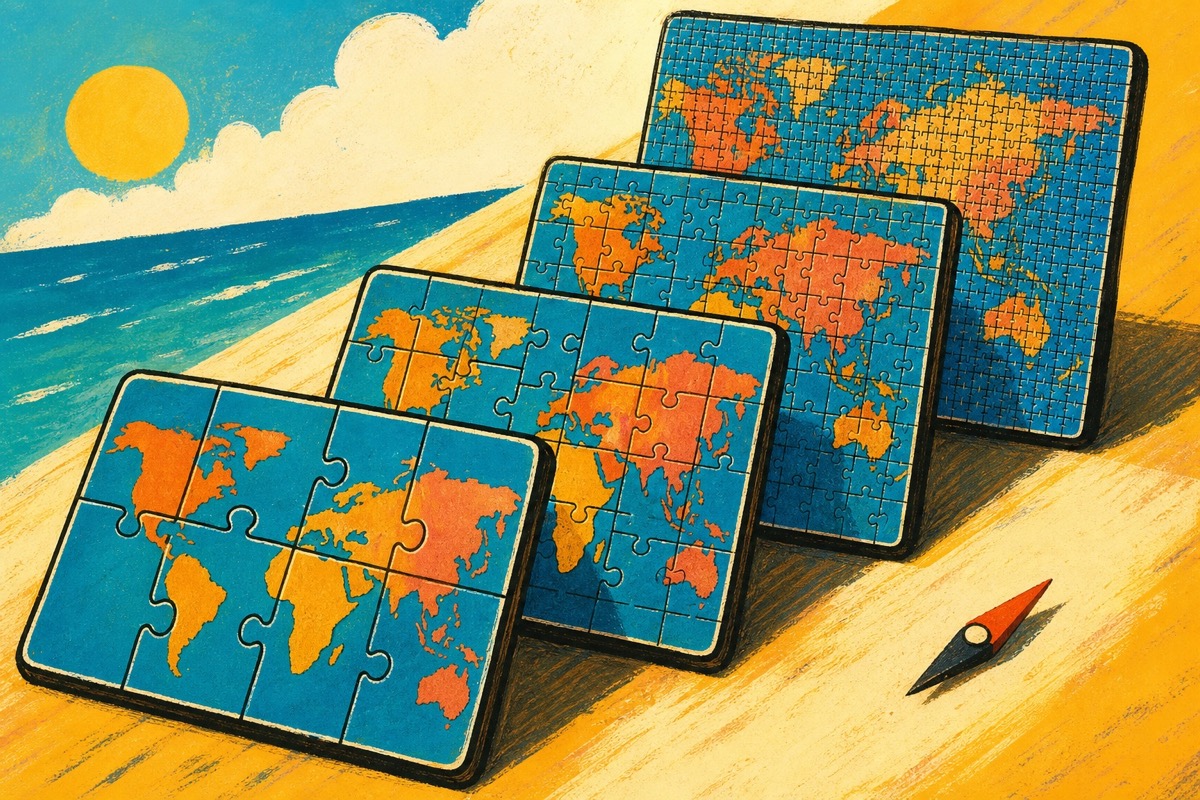
Four illustrated world map puzzles arranged in progressively harder levels

Four challenges

Progress from 9 pieces to the 49-piece Atlas Master board.

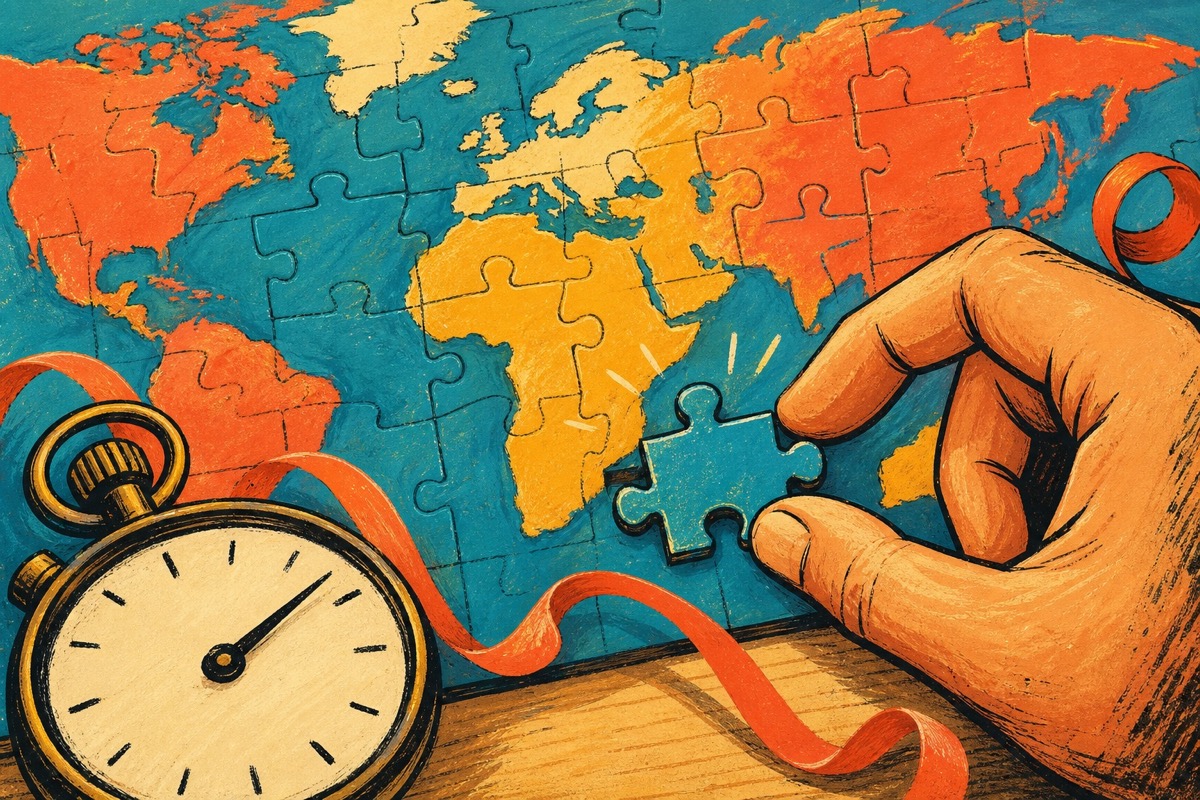
Hand fitting the final world map puzzle piece beside a stopwatch

A score to chase

Improve your time, use fewer moves and set a new best.

Browse the complete free geography map games collection.

How to play.

  1. 01

    Choose your map

    Start with 9 pieces, then move up when the coastlines begin to feel familiar.

  2. 02

    Swap the pieces

    Drag one tile onto another, or tap any two pieces. Correct tiles glow with a small green marker.

  3. 03

    Chase a cleaner solve

    Every move and second counts toward your score. Hold the hint button only when you need it.

Look longer.
Notice more.

A world map jigsaw makes you read the image, not a label. Four visual cues do most of the work.

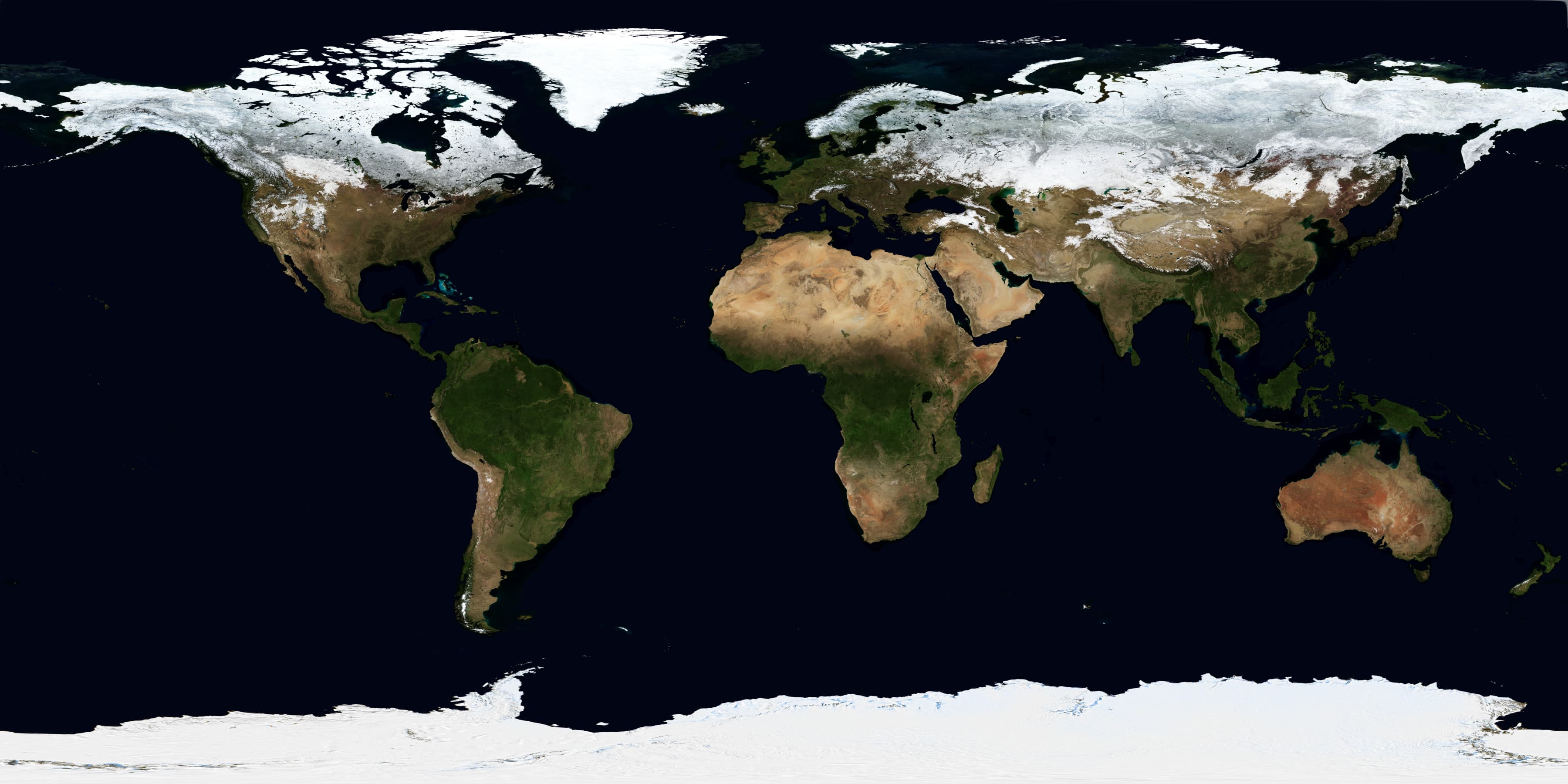
Physical world map showing coastlines, oceans, ice, desert and vegetation

Read the physical map

Shape, position, empty space and terrain all become clues.

Four ways the map gives itself away.

  • 01CoastlinesDistinctive edges and peninsulas orient each tile.
  • 02NeighboursLandmasses reconnect north, south, east and west.
  • 03OceansEmpty space matters just as much as the land.
  • 04ClimateSnow, desert and vegetation make fragments familiar.
Research and sourcesDoes active map play help memory?

A small 2024 study reported higher average spatial and textual recall in its map-puzzle group, although the differences were not statistically significant. Promising—not proof that a jigsaw alone guarantees better memory. Read the study.

The puzzle uses physical world imagery derived from NASA’s Blue Marble collection. Like every rectangular world map, it is a projection. Compare apparent land size in our true size of countries explorer.

Puzzle questions.

The useful details, kept out of the way until you need them.

Is this world map jigsaw puzzle free?

Yes. Every difficulty is free to play in your browser with no account or download required.

Does the puzzle work on a phone or tablet?

Yes. Drag pieces with a finger or tap any two pieces to swap them. The board and controls are designed for small touchscreens first.

How is this different from the World Map Game?

The jigsaw asks you to reconstruct a scrambled world map. TripMemo’s World Map Game instead names a country and asks you to locate it. They test different spatial skills.

Can children play the world map puzzle?

Yes. The 9-piece Explorer level is a gentle starting point, while the 16-, 25- and 49-piece levels create progressively harder visual-memory challenges.

Do I need to download the puzzle or create an account?

No. The complete world map puzzle runs in your browser, and every level is available without a download, registration or account.

Which world map puzzle difficulty should I choose?

Start with 9 pieces if the map is unfamiliar, choose 16 or 25 for a faster challenge, or try the 49-piece Atlas Master board when you can recognise coastlines from small fragments.

Keep exploring.

Switch from rebuilding the world to finding named countries or recognising one from its shape.