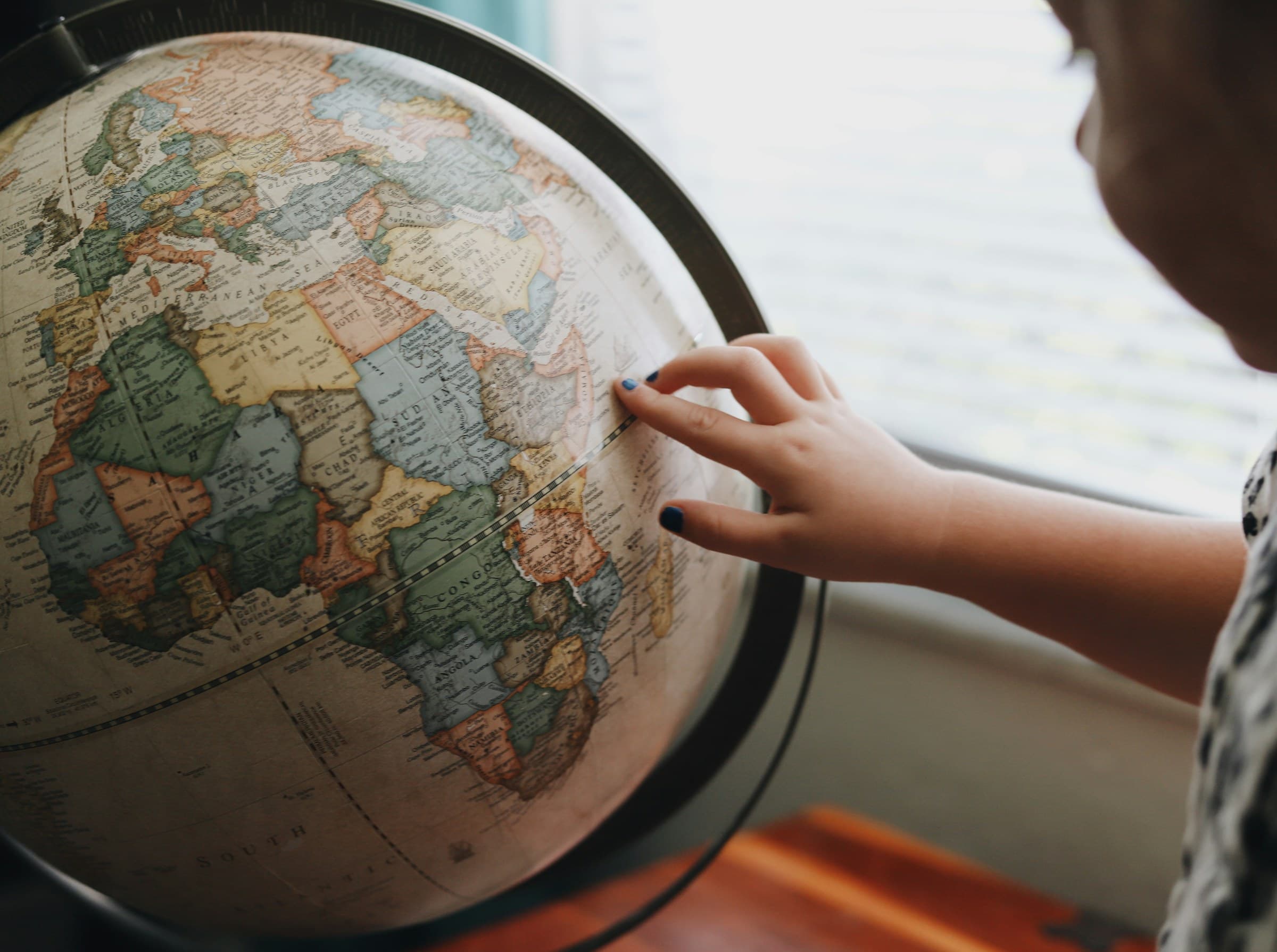
True size of countries map
A true size map displays countries using equal-area scaling instead of enlarging places near the poles. Use the comparison tool above to see two country shapes at the same honest scale.
True Size of Countries
Compare any two countries or continents on a real size map. Every shape is drawn at equal scale, so you can see each country's actual size and area without Mercator distortion.
Popular Comparisons
Real Country Size Comparison
This interactive country size comparison tool answers how big countries really are. Unlike a standard world map, it compares every selected shape using mathematically verified equal-area scaling.
A true size map displays countries using equal-area scaling instead of enlarging places near the poles. Use the comparison tool above to see two country shapes at the same honest scale.
A country’s real size is its surface area on the curved Earth, measured in square kilometres. The orange and navy shapes are normalized so their visible areas match that real-world ratio.
Choose any two countries or continents to create an instant country size comparison. The result shows both actual areas and tells you exactly how many times larger one is than the other.
How to Use the True Size Map
Pick any two countries and our tool draws them at exactly the same scale, with a plain-English answer telling you which one is bigger and by how much.
Tap the first picker and choose any of 195 countries or 7 continents — search is built in.
Tap the second picker. The two countries appear side-by-side on the same canvas.
Both shapes are drawn at exactly the same scale, so the visual size difference matches reality.
Tap a preset to instantly answer Greenland vs Africa, Russia vs USA, Australia vs Europe and more.
The Mercator Projection · 1569
In 1569, the Flemish cartographer Gerardus Mercator drew a world map for sailors. To keep compass bearings as straight lines, he stretched the planet vertically — more and more as you approached the poles.
It was brilliant for navigation. Disastrous for understanding what countries actually look like.
On a Mercator map, every country's area is multiplied by sec²(latitude). At the equator the factor is 1. At 60° north or south it jumps to 4. At Greenland's centroid (~72°N) it's 10. Antarctica explodes to infinity — which is why most maps clip it off entirely.
Nearly five hundred years later, this same projection still powers Google Maps, Apple Maps, OpenStreetMap and most of the digital atlases people see every day. We grew up looking at a lie about the shape of the world — and we never question it.
This page is the cure. Pick any two countries. See their real ratio.
The Top 10 Mercator Liars
Ranked by Mercator's area distortion factor at each country's real centroid latitude. The further from the equator, the bigger the lie.
Distortion factor = sec²(latitude). It's the ratio between Mercator-displayed area and real area.
Three Mercator Lies, Corrected
14×
On the Mercator map, Greenland looks roughly the same size as Africa. In reality, you could fit Greenland into Africa fourteen times. Pick the Greenland vs Africa preset above and see them drawn at the same scale — Greenland is a fleck of land.
1.7×
Mercator stretches Russia across the top of every world map, making it look almost five times the size of the United States. In reality it is bigger, but only modestly — about 1.7 times the area.
1.4×
Mercator paints Antarctica as an endless white band wider than Africa, Asia and Australia combined. Released from its polar prison and measured honestly, Antarctica is only about forty-four percent larger than the United States — not the planet-sized continent the map suggests.
True Size of Countries FAQ
Everything about Mercator distortion, real country areas, and how this interactive world map fixes the lie.
The true size of a country is its real surface area in square kilometres, measured on the curved surface of the Earth. World maps based on the Mercator projection distort this by stretching land near the poles. Our true size of countries tool lets you pick any two countries (or continents) and see them drawn at exactly the same scale — with a plain-English answer telling you which is bigger and by how much.
The best way to compare country sizes is to draw both countries at the same equal-area scale and compare their real surface area in km². This page does both: it renders the selected countries with matching visual-area scaling and shows the exact country size comparison underneath.
It is a real size comparison map rather than a single world map projection. Instead of showing every country at once, it lets you pick two countries or continents and renders them at equal scale, which is the clearest way to see their actual size without Mercator distortion.
For country comparisons, true size, real size and actual size all refer to the same idea: the real surface area of a country on Earth, usually measured in square kilometres. The phrases differ because people search for the concept in different ways.
Mercator stretches the world vertically more and more as you approach the poles. At Greenland's centroid (about 72°N), the area scale factor is roughly ten — meaning the Mercator map shows Greenland about ten times larger than it really is. That's why Greenland looks comparable to Africa on most world maps, even though Africa is fourteen times bigger.
Yes. Greenland is about 2.16 million km², while Africa is about 30.4 million km². You could fit roughly fourteen Greenlands inside the African continent. The illusion that they are similar in size comes entirely from the Mercator projection.
Mercator is a cylindrical map projection invented by Gerardus Mercator in 1569. It preserves angles and shapes locally — which is why it's still the default for navigation and digital maps like Google Maps and OpenStreetMap. The trade-off is that it badly distorts area, especially near the poles. Our true size of countries tool reveals exactly how much.
Equal-area projections such as Gall–Peters, Mollweide, Hammer, and Equal Earth all preserve area and show the true size of countries. They distort shape instead. The Robinson projection is a popular compromise. This tool uses an equal-area projection (Equal Earth) under the hood when it draws two countries side-by-side — so the visual sizes you see are honest.
Country borders are stored as latitude/longitude polygons from the open Natural Earth dataset. We compute each country's real area on the spherical Earth using standard spherical-geometry math, which gives a true surface-area number in km². When you compare two countries, we render both shapes using the same equal-area projection at the same scale — so their visual sizes honestly reflect the real ratio.
Russia's centroid sits around 61°N — high enough that Mercator inflates its area by roughly four times. The USA's centroid is near 38°N, where the distortion is only about 1.6×. So Mercator inflates Russia much more than the USA, making the size gap look enormous. In reality Russia is only about 1.7 times the size of the USA, not five times.
No. Mercator can't even draw Antarctica properly — most maps clip it as an infinite stretched band. Antarctica is about 14.2 million km² — bigger than the United States but smaller than Russia. On a true size of countries comparison, Antarctica fits between the USA and Russia in area, not above all of them.
Yes. The whole tool is mobile-first. The two pickers stack cleanly on small screens, the visual comparison resizes to fit your viewport, and one-tap preset buttons load iconic comparisons like Greenland vs Africa or Russia vs USA without any typing.
Areas are computed from open Natural Earth country boundaries on the WGS-84 spheroid using standard spherical-geometry math, giving a true surface-area number in km² that matches published country areas to within a fraction of a percent. The Mercator distortion factors in the Top 10 table are computed using sec²(latitude), the standard formula for Mercator area distortion.
Sources & Methodology
Every claim on this page is grounded in open, citable data. Click through to verify any number you see.
Country borders & shapes
Natural Earth 1:110m cultural vectors, distributed via the world-atlas npm package.
naturalearthdata.comContinent areas
Africa 30.37M, Asia 44.58M, Europe 10.18M, North America 24.71M, South America 17.84M, Oceania 8.53M, Antarctica 14.20M km² — sourced from Encyclopædia Britannica and Wikipedia.
Britannica — ContinentMercator projection (1569)
Original title: Nova et Aucta Orbis Terrae Descriptio ad Usum Navigantium Emendate Accommodata. Designed by Gerardus Mercator for marine navigation.
Mercator 1569 world mapMercator distortion formula
Area scale factor = sec²(latitude). Standard cartographic identity, proved in J. P. Snyder, "Map Projections — A Working Manual", USGS Professional Paper 1395 (1987).
Snyder, USGS PP1395Web Mercator in Google, Apple, OSM
Modern slippy-map tiles use the EPSG:3857 "Web Mercator" projection — Google Maps, Apple Maps, OpenStreetMap, Mapbox and Bing all share this convention.
EPSG:3857 specLast reviewed 2026-05-08 · Areas rounded for display; raw values match the cited sources to within a fraction of a percent.
More Free Travel Tools
If you liked exploring the true size of countries, try our other free, interactive geography and travel-planning tools.
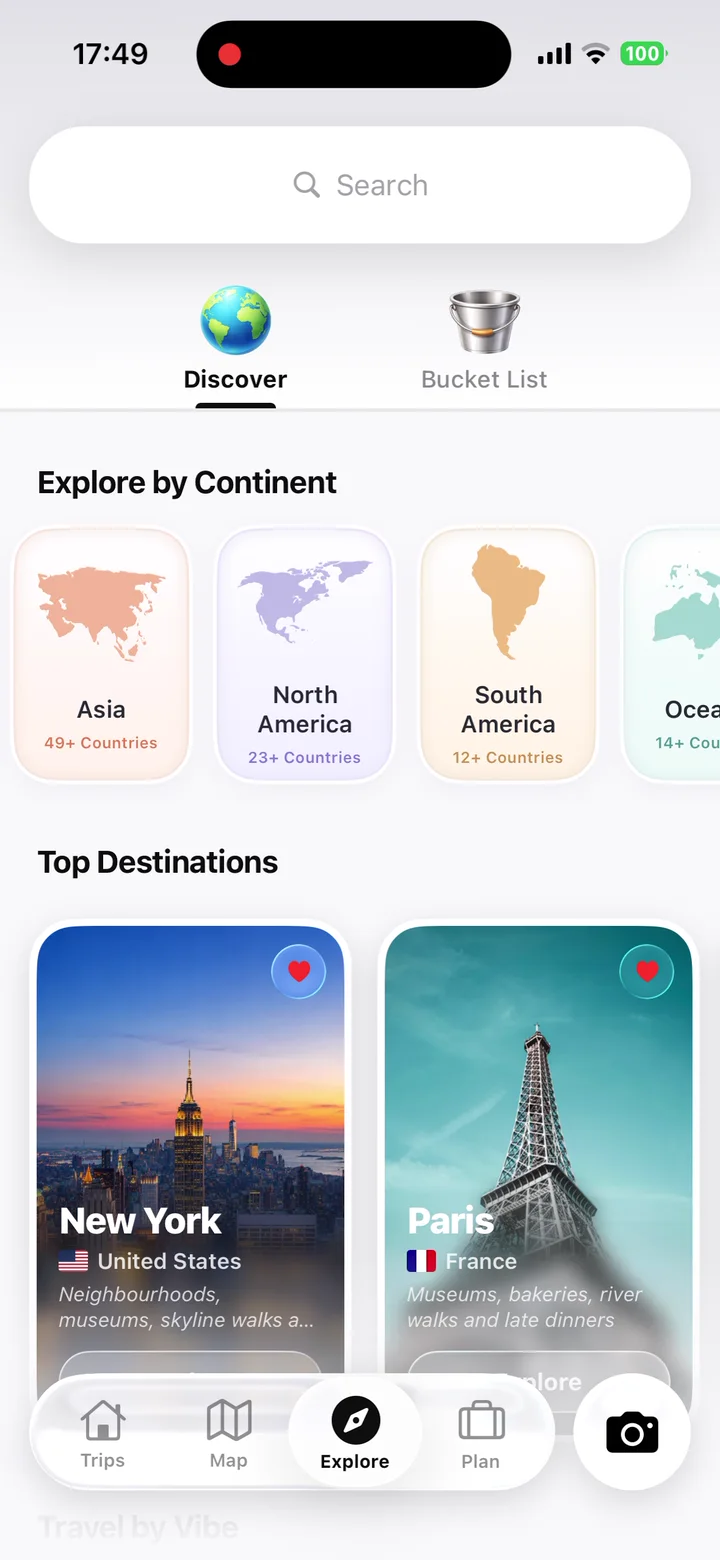
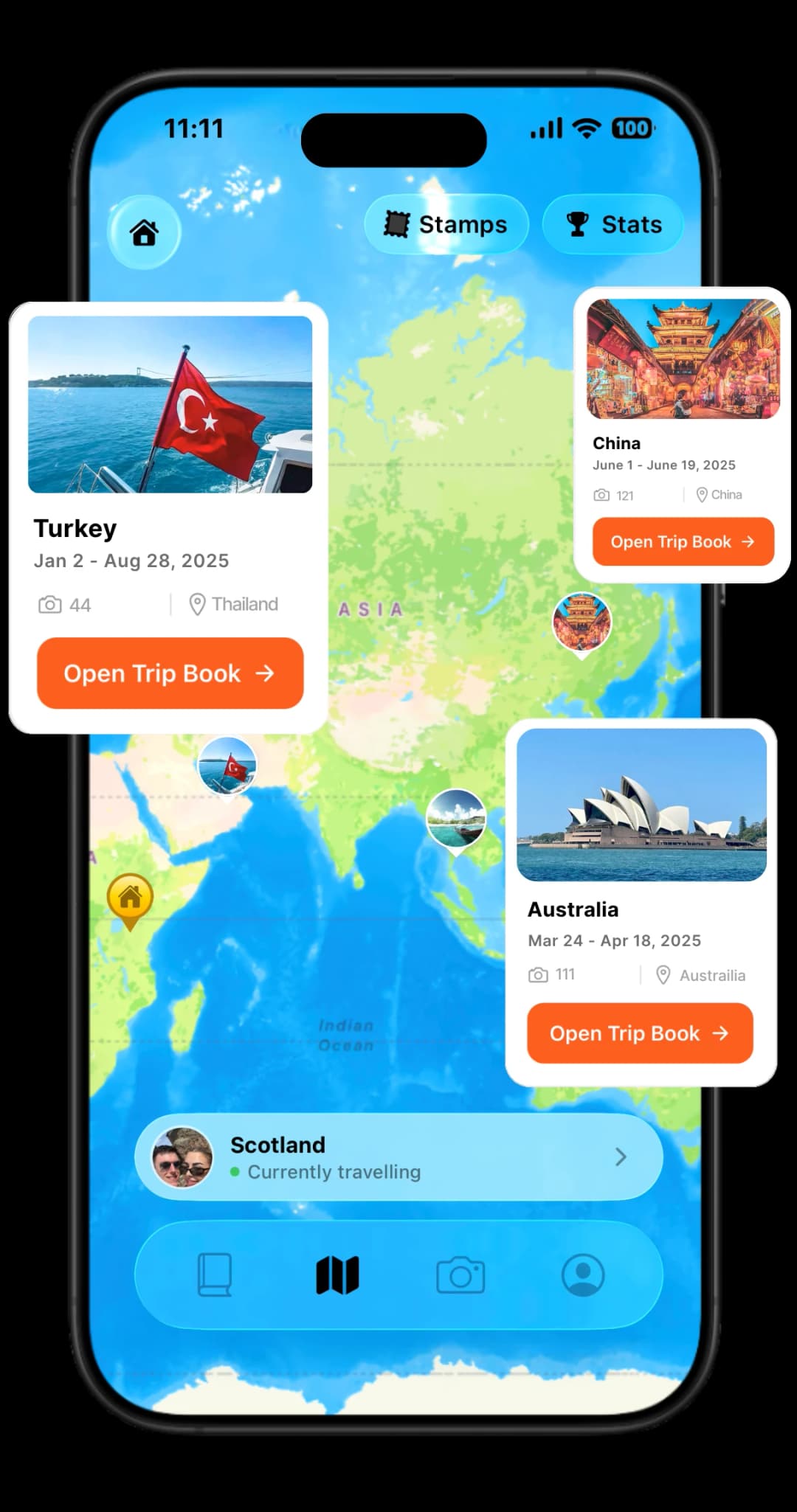
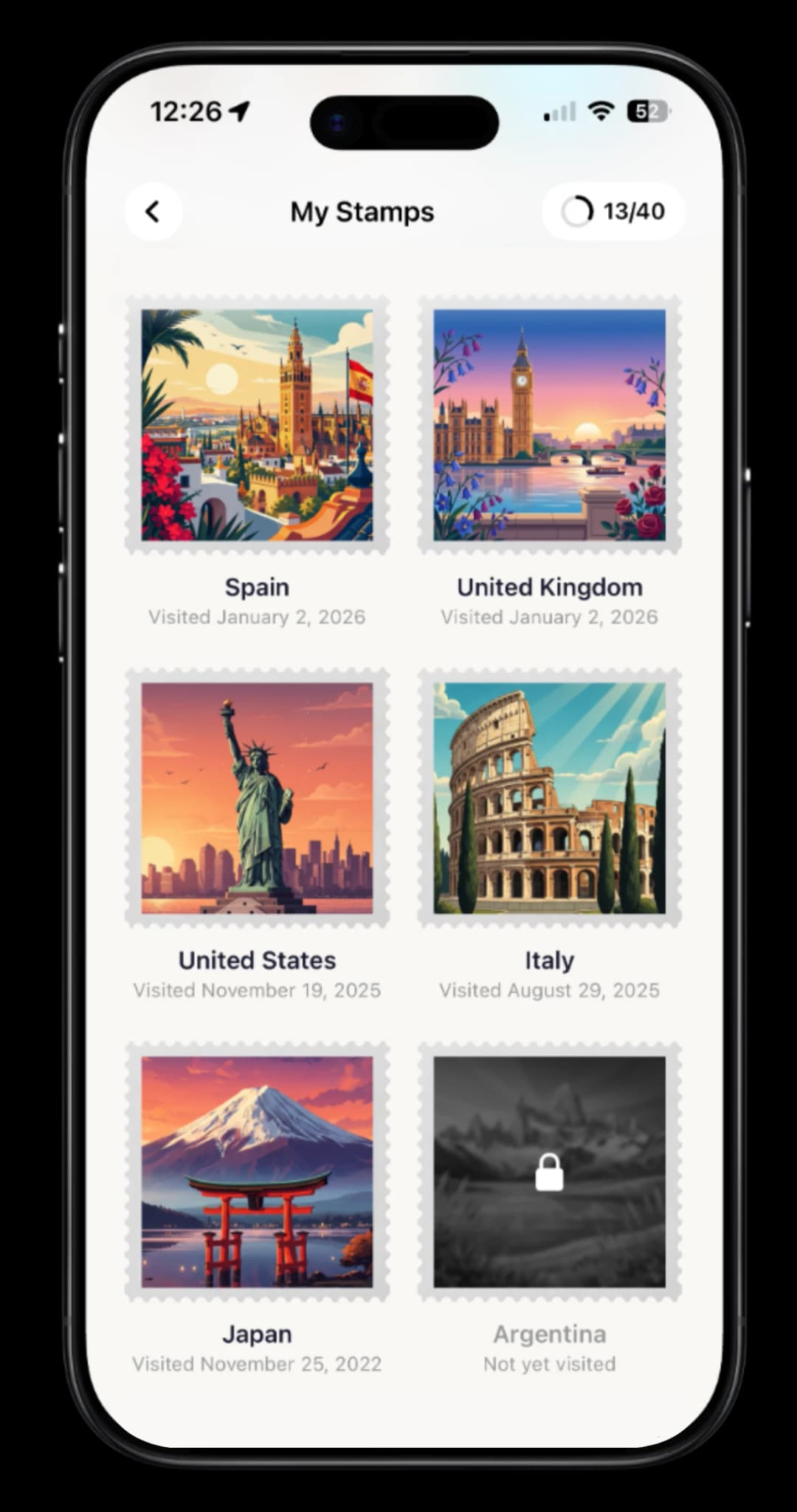
Track every country you visit, see your trips on a real globe, and document the journey. TripMemo is the travel journal app for travellers who care about the real world.