


Max
Co-Founder, TripMemo
9 min read•Published
Summary
Stop taking random photos. Use these 8 shot categories to capture complete travel stories—from arrivals to departures, details to emotions. Includes printable checklist.
You return from a trip with 2,000 photos. Looking through them, you realize:
- 47 shots of the same landmark from slightly different angles
- Zero photos of your hotel room
- Nothing showing how you got there
- No pictures of the meal that changed your life
- The "feeling" of the trip is somehow missing
The problem isn't your camera. It's that you're shooting randomly instead of intentionally.
A shot list fixes this.
Professional photographers use shot lists to ensure complete coverage. This guide gives you the travel version—8 categories of photos that turn a random collection into a complete story.
The 8 Essential Shot Categories
1. The Arrival Shot
What it is: Your first view of a new place.
Why it matters: This is the "before" of your transformation. The moment you arrive, you see things with fresh eyes. That perspective fades within hours.
What to capture:
- First view from the plane/train/car
- Stepping off the plane
- Airport/station arrivals
- First glimpse of the skyline
- The moment you see the ocean/mountains/city
Photo: The train window as we pulled into Venice. Water instead of roads. I didn't know it would hit me like that.
Caption: "Somehow seeing it through a dirty train window made it more real than any postcard. We actually made it."
2. The Context Shot
What it is: Wide shots that establish where you are.
Why it matters: Close-ups are great, but without context, you won't remember where that close-up was taken. Context anchors the memory.
What to capture:
- Wide street scenes
- View from your hotel window
- The approach to a landmark (not just the landmark)
- A photo of yourself with the location visible
- Maps, signs, or place markers
Pro tip: When you arrive somewhere new, take a context shot before you start shooting details.
3. The Detail Shot
What it is: Close-ups of textures, patterns, and small moments.
Why it matters: Details trigger sensory memories. The texture of a cobblestone street, the pattern on a tile, the steam rising from coffee—these bring back how it felt.
What to capture:
- Textures: cobblestones, fabrics, food surfaces
- Patterns: tiles, architecture, nature
- Small objects: keys, receipts, menus
- Hands doing things (eating, holding, pointing)
- Typography and signage
Shot 1: The hand-painted tiles at the riad. Each one slightly different.
Shot 2: Close-up of the tagine lid being lifted. Steam, steam, steam.
Shot 3: The leather of the market, worn smooth by hands.
Why these work: Years later, I see that tile pattern and smell the riad. The tagine photo makes me taste the apricot lamb.
4. The Food Shot
What it is: Documentation of meals, snacks, and drinks.
Why it matters: Food is memory's best friend. A photo of a dish can teleport you back to that exact table, that exact moment.
What to capture:
- The dish itself (overhead and angle)
- The setting (table, restaurant ambiance)
- Someone enjoying it
- The menu (for remembering the name later)
- Street food in context
- The drink in hand
Pro tip: Take the photo BEFORE you eat. The first bite is too tempting.
5. The People Shot
What it is: The humans you're traveling with—and without.
Why it matters: Places change. People in places are irreplaceable moments.
What to capture:
- Your travel companions (candid > posed)
- Yourself in the scene
- Locals (respectfully, with permission when appropriate)
- Strangers who tell a story (the waiter, the musician, the market vendor)
- Group dynamics (walking, laughing, waiting)
The candid rule: The best people shots happen when they're not looking at the camera. Wait for the genuine moment.
The photo I almost didn't take: My wife looking at a map in Florence, frustrated because we were lost, streetlight catching her hair.
Why it's my favorite: It's real. We WERE lost. We figured it out. This photo captures the actual trip, not the Instagram version.
6. The Transit Shot
What it is: The in-between moments of getting somewhere.
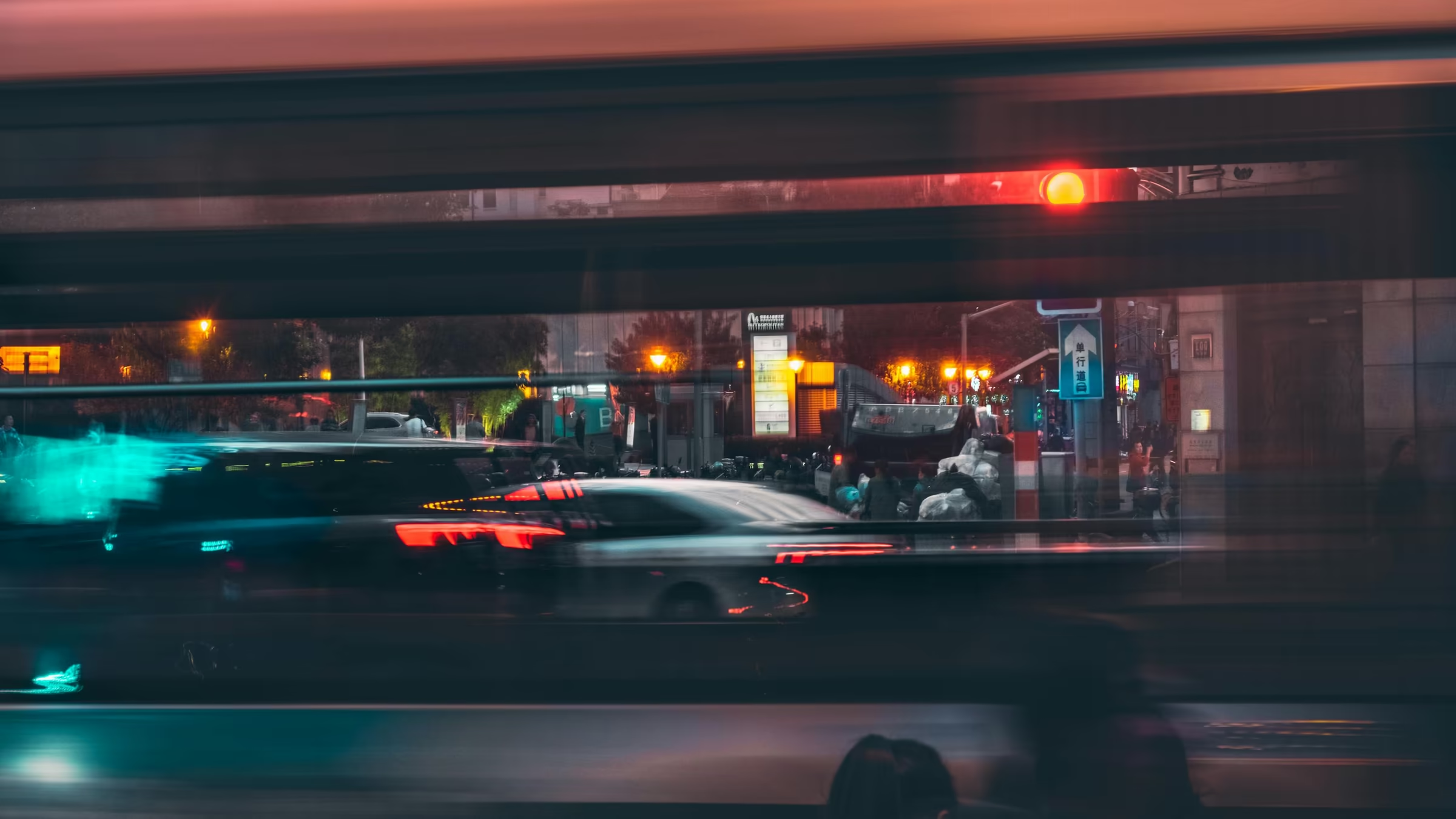
Why it matters: Travel is mostly transit. The train window, the airport waiting, the taxi ride—these ARE the trip. Don't just shoot destinations.
What to capture:
- Train/plane/bus windows
- Waiting areas and lounges
- Your seat and setup
- Fellow passengers (discreetly)
- The journey itself (changing scenery)
- Maps and schedules
The transit revelation: Sometimes the best memories are from the journey, not the arrival.
7. The Surprise Shot
What it is: Unplanned moments that weren't on any itinerary.
Why it matters: The best travel stories are detours. Document them.
What to capture:
- The wrong turn that led somewhere better
- The unexpected festival/market/event
- Weather surprises
- Animal encounters
- Chance meetings
- Happy accidents
What happened: Wrong bus. Ended up in a village not on any map. Found a restaurant where the grandmother cooked for us for €7.
The photo: Her bringing out the third course, laughing at our shocked faces.
Why it matters: This became THE story of the trip. No shot list would have predicted it.
8. The Departure Shot
What it is: Your last look at a place.
Why it matters: Departures are emotional. Capturing them creates narrative closure.
What to capture:
- Last view from the hotel window
- Walking away from a landmark
- Airport/station departure
- The "one last look" moment
- Empty spaces where memories happened
The departure ritual: Before leaving a place, turn around and take one photo. That's your goodbye.
Join the TripMemo
Newsletter
Unsubscribe anytime. Read our privacy policy.
The Daily Shot Checklist
Use this as a mental checklist each day:
| Category | ✓ | Notes |
|---|---|---|
| Arrival | [ ] | First view of new place |
| Context | [ ] | Wide establishing shots |
| Details | [ ] | Textures, patterns, close-ups |
| Food | [ ] | At least one meal documented |
| People | [ ] | Companions, locals, yourself |
| Transit | [ ] | The in-between moments |
| Surprise | [ ] | Unplanned moments |
| Departure | [ ] | Last look before leaving |
Shot Lists by Trip Type
City Trip Shot List
Must-capture:
- Skyline/cityscape (day and night)
- Main landmark (your angle, not the postcard)
- Local neighborhood (non-tourist areas)
- Public transit
- Market/shopping district
- Street art or signage
- Coffee/café culture
- Nightlife moment
Easy to forget:
- Your hotel/accommodation
- The view from your window
- Side streets and alleys
- Local people going about life
Beach/Nature Trip Shot List
Must-capture:
- Sunrise OR sunset (golden hour)
- Water texture (close-up)
- Wide landscape
- Your footprints/trace in the sand
- Wildlife (respectfully)
- Weather changes
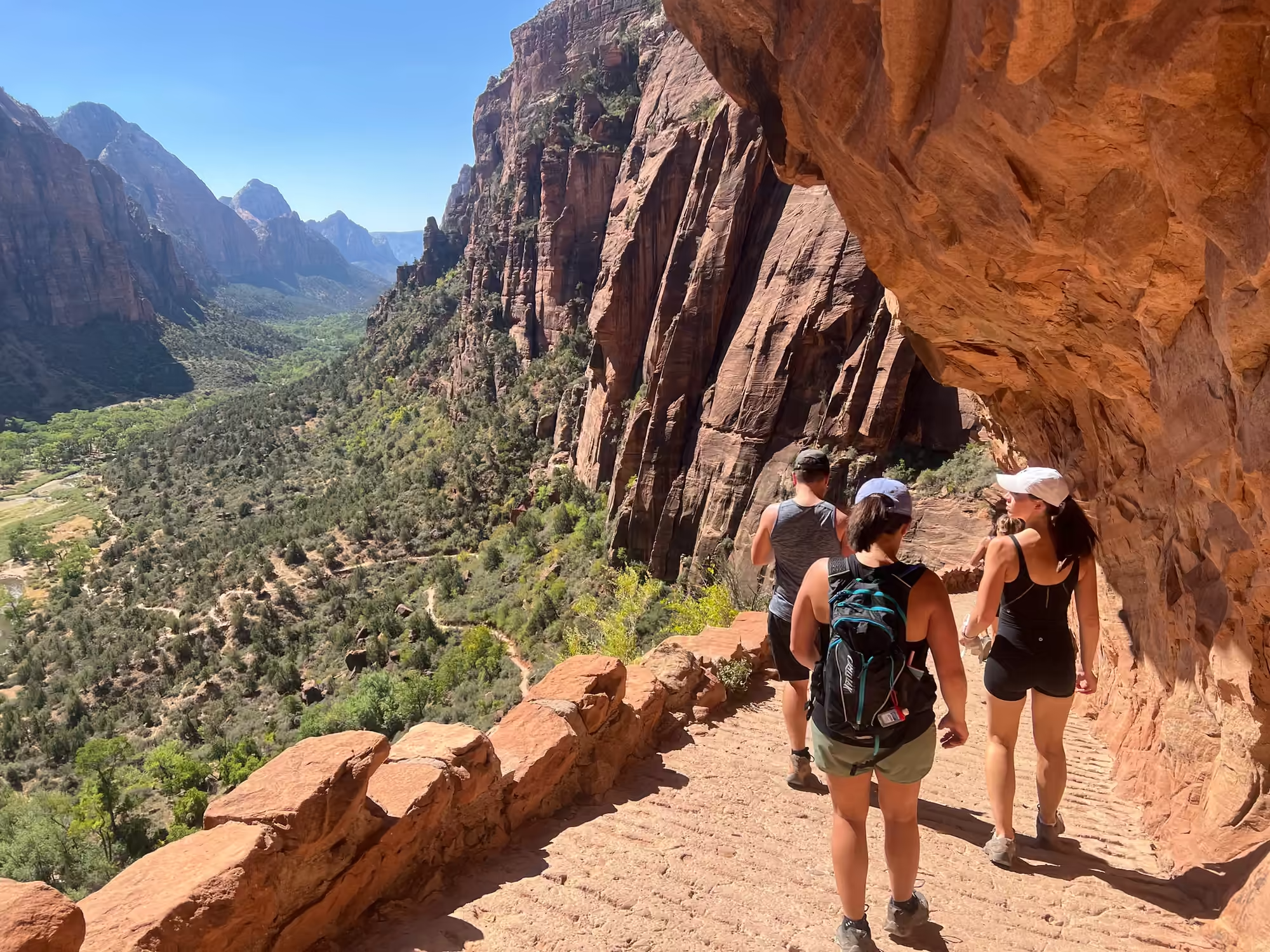
- Scale shot (person tiny in landscape)
Easy to forget:
- Your gear/setup (towel, chair, book)
- The path to get there
- Shadow self-portrait
Road Trip Shot List
Must-capture:
- The vehicle
- Map/route planning
- Dashboard perspective
- Roadside stops
- Gas stations and diners
- Highway signs
- Changing landscapes through the window
- Night driving (passenger shot)
Easy to forget:
- The snacks
- The playlist/audio setup
- Random towns you drove through
Cultural/Historical Trip Shot List
Must-capture:
- Main historical site
- Architectural details
- Museum highlights
- Traditional clothing/crafts
- Local traditions or ceremonies
- Food specific to the culture
- Artisan work
Easy to forget:
- Crowds (they tell the story too)
- Your emotional reaction
- Modern life next to ancient
%20copy%202.avif&w=384&q=75&dpl=dpl_5LiWpjAxVHcJfxZ5FqYxsrCPPe5e)
%20copy%203.avif&w=384&q=75&dpl=dpl_5LiWpjAxVHcJfxZ5FqYxsrCPPe5e)

Your trips deservemore than a camera roll
.avif&w=96&q=75&dpl=dpl_5LiWpjAxVHcJfxZ5FqYxsrCPPe5e)
Quality Over Quantity
The goal isn't 2,000 photos. It's 100 photos that tell the complete story.
Before you take a shot, ask:
- Does this fit a category?
- Will this trigger a memory in 5 years?
- Is this the best angle/moment?
- Do I already have 10 versions of this?
The rule of 3: For landmarks, take 3 different shots: the classic angle, your unique angle, and the context shot. Then stop.
The "Story Arc" Framework
A complete trip album follows a narrative:
- Setup: Anticipation, preparation, departure
- Arrival: First impressions, adjustment, orientation
- Exploration: Daily adventures, discoveries, routines
- Climax: The highlight moment(s)
- Resolution: Winding down, last experiences
- Departure: Final moments, goodbye
Ensure your shot list covers each phase—not just the climax.
Shots Most People Forget
These are consistently missing from travel albums:
- The hotel/accommodation — Where you slept is part of the story
- Transportation — Trains, buses, taxis, bikes
- Failures and frustrations — The rain, the closed museum, the wrong turn
- Prices and menus — Useful context for memory
- Morning routines — Coffee, breakfast, getting ready
- Evening transitions — Sunset rituals, pre-dinner moments
- Yourself — You were there too
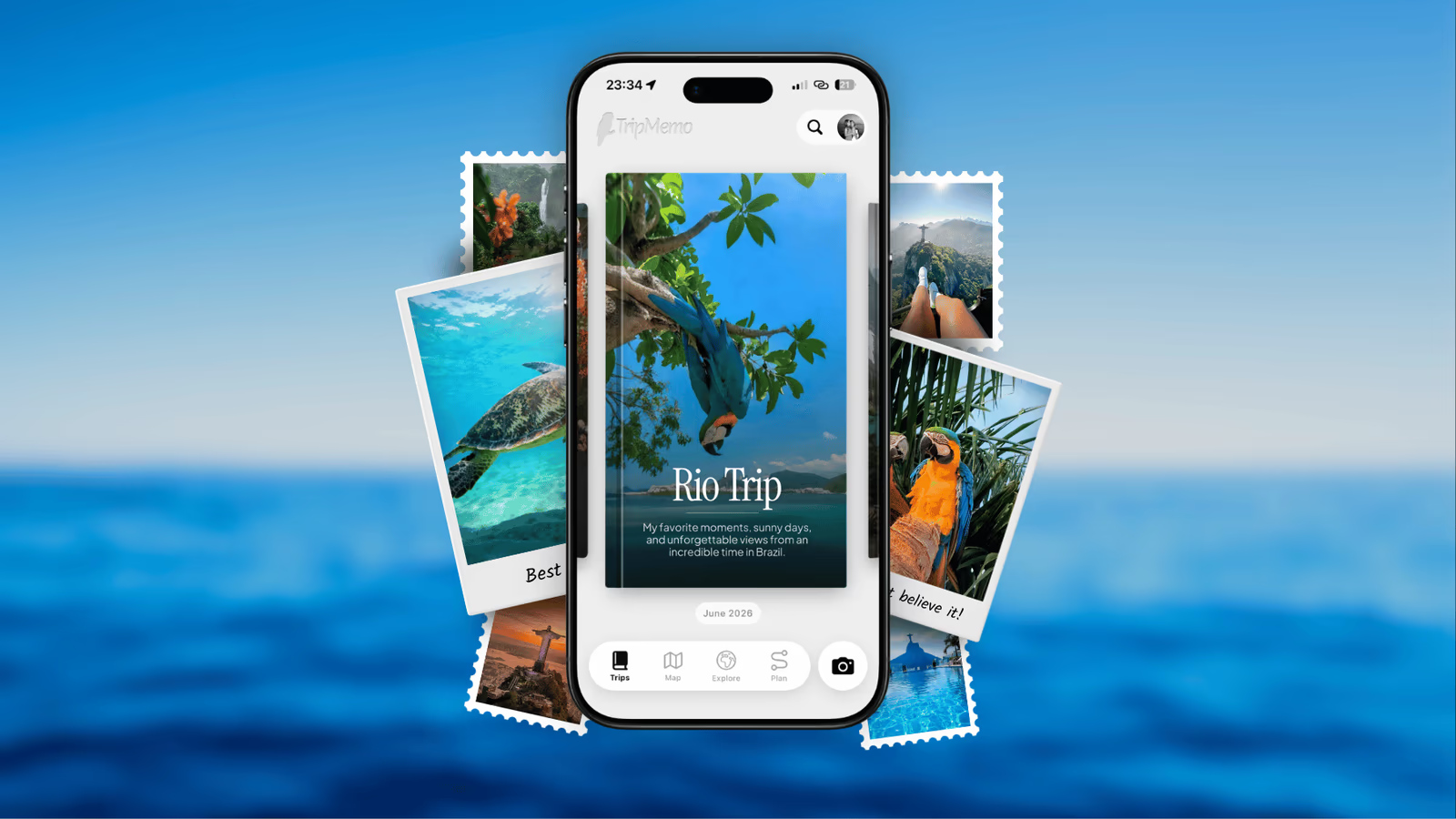
Using Shot Lists with TripMemo
TripMemo helps you build complete trip albums:
- Automatic organization — Photos sorted by date and location
- Category gaps visible — Easily see what's missing
- Caption prompts — Context reminders for each photo
- Timeline view — Ensures narrative coverage from arrival to departure
Common Mistakes to Avoid
- Only shooting highlights — The in-between moments matter
- Ignoring bad weather — Rain photos are beautiful and honest
- Too many duplicates — One good shot beats ten mediocre ones
- Forgetting yourself — Use timers, ask others, take selfies
- All photos, no words — A shot list photo with no caption fades fast
The Printable Checklist
Copy this for your next trip:
DAILY SHOT LIST
□ Arrival/First view
□ Context/Wide establishing
□ Details/Close-ups (3 minimum)
□ Food (at least one meal)
□ People (companions, locals, self)
□ Transit/In-between
□ Surprise/Unplanned
□ Departure/Last look

TRIP-WIDE COVERAGE
□ Accommodation documented
□ Each destination covered
□ Narrative arc complete
□ Failures/challenges captured
□ Emotional moments preserved
What's Next?
Now that you know what to shoot, learn how to use those photos:
- Captioning: How to Caption Travel Photos
- Photo journaling: Photo Travel Journal Guide
- Organization: How to Organize Travel Photos
- Complete system: The Complete Guide to Travel Journaling
A random photo collection is just noise. An intentional shot list creates a story.
You don't need a better camera. You need better intention.
Start with these 8 categories on your next trip, and watch your travel album transform from "photos I took" to "story I lived."
Ready to build your visual travel journal? TripMemo turns your shot list photos into a timeline automatically—so you can focus on capturing, not organizing.