


Max
Co-Founder, TripMemo
5 min read•Published
Summary
Quick, actionable tips for documenting your road trip without pulling over every five minutes. From voice memos to gas station postcards, here's how to capture the open road.
You're cruising at 70mph. The sunset is perfect. The playlist just hit that song. This is the moment.
You can't stop. You shouldn't stop. But you want to remember it.
Here are 15 road trip journaling tips that don't require pulling over every time something beautiful happens.
Quick Capture Tips
1. Voice Memos Are Your Best Friend
Your phone's voice recorder is the ultimate road trip journal tool.
How to use it: When something hits you—a thought, a view, a feeling—just record it. "Mile marker 247, the clouds look like someone spilled paint across the sky. Sarah's asleep. I feel completely free."
Transcribe later. Or don't. The audio itself is the memory.
2. The Passenger Is the Scribe
If you're not driving alone, assign roles.
Driver drives. Passenger documents. They write what you dictate. They photograph what you point at. They capture the moments you can't.
Switch roles. Share the load.
3. Gas Station Journaling
Every fuel stop is a journaling opportunity.
While the tank fills, write three things:
- Best moment since last stop
- Something unexpected you saw
- How you're feeling right now
Takes 90 seconds. Creates a complete trip log.
What to Document
4. The Odometer Tells Stories
Write down your mileage at the start and end of each day.
"Day 3: 45,200 → 45,650" doesn't sound romantic. But in five years, seeing that you drove 450 miles through Utah will trigger everything you can't quite remember now.
5. Collect the Weird Stuff
Road trips are made of weird stuff:
- The diner where the waitress called everyone "honey"
- The billboard that made no sense
- The town with one traffic light and three churches
- The gas station bathroom that was surprisingly nice
Document the weird. It's what makes your trip yours.
6. Document the Playlist
What you listened to becomes the soundtrack of your memory.
Write down:
- The song that played during the best view
- The podcast that sparked a two-hour conversation
- The album you finally understood
Music is a time machine. Give yourself the keys.
7. Weather Changes Everything
"It rained through New Mexico" is a story.
Note the weather. The unexpected thunderstorm. The fog that made everything feel like a movie. The heat that made you question your life choices.
Weather isn't just conditions. It's atmosphere.
Evening Rituals
8. The Motel Room Debrief
Before you sleep, spend 10 minutes writing.
The template:
- Today's drive: [start] to [end], [miles]
- Highlight: the one thing you'll tell people about
- Surprise: something you didn't expect
- Tomorrow: what you're looking forward to
Short. Complete. Consistent.
9. Draw the Route (Badly)
You don't need to be an artist.
Draw a squiggly line of your day's drive. Mark the stops. Add little symbols for what happened. A star for the best view. A knife and fork for where you ate.
Terrible drawings are better than no drawings.
10. Save One Physical Thing Per Day
A gas receipt. A napkin from the diner. A pressed flower from the rest stop.
Tape it into your journal. Write one sentence about it.
Physical artifacts anchor memories in ways photos can't.
Join the TripMemo
Newsletter
Unsubscribe anytime. Read our privacy policy.
In-Car Techniques
11. The Photo-Voice Combo
Take a photo out the window. Immediately record a voice memo describing what you're feeling.
The photo shows what it looked like. The audio captures what it felt like.
Together, they're complete.
12. Mile Marker Memories
Pick random mile markers to document.
"Mile 100: Thinking about that conversation from yesterday." "Mile 200: The landscape just changed. Desert becoming mountains." "Mile 300: Need coffee. Also, this is beautiful."
It's arbitrary. That's the point.
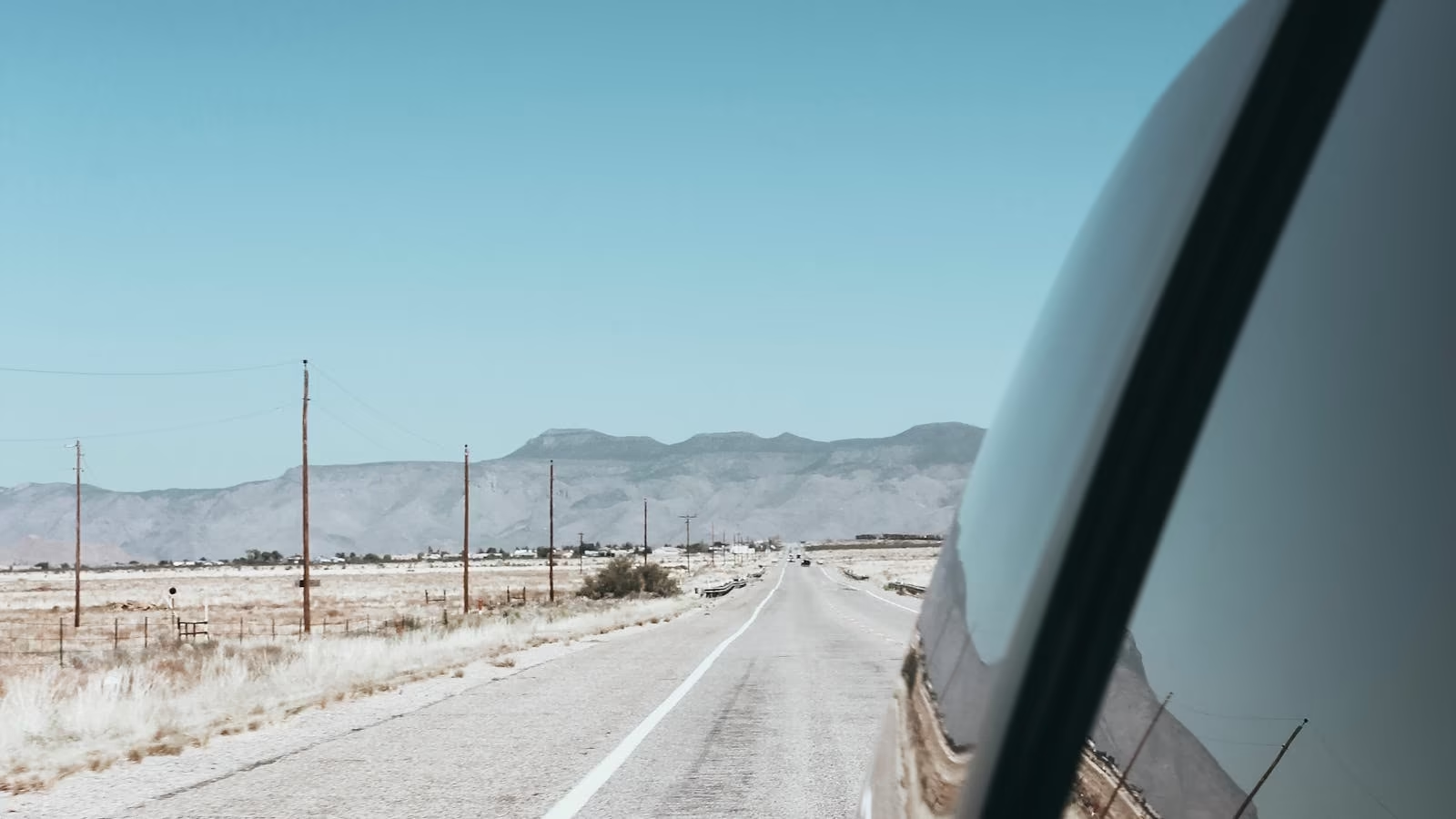
13. The Windshield Frame
Your windshield is a camera frame.
What's in it right now? Describe it like you're writing a postcard. "Through the glass: endless wheat fields, one red barn, sky that goes forever."

%20copy%202.avif&w=384&q=75&dpl=dpl_EPXMHFF758wZiFUsuw99japedPYQ)
%20copy%203.avif&w=384&q=75&dpl=dpl_EPXMHFF758wZiFUsuw99japedPYQ)

Your trips deservemore than a camera roll
.avif&w=96&q=75&dpl=dpl_EPXMHFF758wZiFUsuw99japedPYQ)
After the Trip
14. Connect the Dots
Once you're home, read through everything. Your voice memos, your gas station notes, your motel scribblings.
You'll see patterns. Stories. A narrative you didn't know you were creating.
Write a one-page summary of the whole trip. The arc. The transformation. What you learned about the road and yourself.
15. Create the Artifact
Turn your scattered notes into something:
- A TripMemo book with day-by-day pages
- A simple document with photos inserted
- A scrapbook with your collected receipts and tickets
The trip happened. The journal proves it.
The Golden Rule
Document in motion, reflect at rest.
While driving: capture quickly, imperfectly, in fragments. While stopped: expand, reflect, connect.
Road trips are linear stories. Your journal doesn't have to be perfect—it just has to keep pace with the road.
Ready to Document Your Next Road Trip?
TripMemo turns your road trip moments into a beautiful, shareable travel book. Add photos, map your route, and create day-by-day pages without the hassle of traditional journaling.
Start your road trip journal →
For a more comprehensive guide to road trip documentation, see our complete road trip journaling guide.
Still choosing what to use on the drive? See our honest comparison of the best road trip apps for 2026, including navigation, route planning, tracking and offline journaling.
Popular Road Trip Destinations
Planning a specific road trip? Check out our destination guides:
- Australia Travel Journal – Document your outback adventure
- New Zealand Travel Journal – Capture both islands
- Iceland Travel Journal – Ring Road chronicles
- Portugal Travel Journal – Coast to coast exploration
- South Africa Travel Journal – Garden Route memories