
Table of Contents
You have 3,000 photos from your trip to Italy. You scroll through them occasionally, but they all blur together. Where was that amazing pasta? Who recommended that hidden church? Why did you take 47 photos of that doorway?
Photos without context become digital clutter. Photo journaling solves this by combining images with the stories that make them meaningful.
What is Photo Journaling?
Photo journaling is the practice of pairing photographs with written context — captions, notes, and reflections that capture what the photo cannot show.
Photo Only
“Sunset over water.”
(Where? When? Why does it matter?)
Photo Journal
“Sunset from the rooftop bar in Oia where we met Dimitri, the retired fisherman who told us about his daughter's wedding. The church bells were ringing. We stayed until the stars came out.”
The difference is not word count — it is information that triggers memory. Names, sounds, emotions, connections. The texture of the experience that a JPEG cannot capture.
Why Photo Journaling Works
Research on memory and photography reveals something counterintuitive: mindlessly taking photos can actually reduce memory retention (Henkel et al., 2014). When we photograph without intention, we outsource remembering to the camera.
But when we photograph with intention — thinking about why we are capturing a moment — and then add context, we get the best of both worlds: visual records plus strengthened memory encoding.
better recall when photos are combined with written reflection
window before details start fading significantly
meaningful photos per day is more valuable than 50 random shots
Photo journaling works because it combines two memory systems: visual recognition (the photo) and semantic memory (the story). Together, they create multiple retrieval pathways to the same experience.
The Photo-First Method
Traditional journaling asks: “What should I write about?” Photo journaling asks: “Why did I take this photo?”
This is the photo-first method — using images as the foundation, then adding text. It is faster, more intuitive, and eliminates the blank page problem.
The 5-Minute Evening Capture
- 1Review the day's photos (swipe through quickly)
- 2Select 3-5 that capture meaningful moments
- 3Add a quick caption to each: who, what, why
- 4Note one sensory detail or emotion per photo
Total time: ~5 minutes. Benefit: years of rich memories.
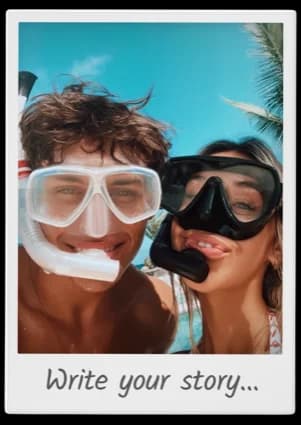
TripMemo is built around this method. Each memory starts with a photo, then you add Journal Notes that provide context. The Polaroid View makes it feel like captioning instant photos.
What to Capture in Captions
Good captions answer the questions your future self will have. They capture what the photo cannot show.
The Who-What-Why Framework
For any meaningful photo, ask three questions:
Who is in this photo? Who took it? Who recommended this place?
Names are the first things we forget. Write them down.
What was happening? What context does the photo not show?
The moments before and after the photo are often the real story.
Why did you take this photo? Why does it matter to you?
The “why” is what transforms a photo into a memory.
Sensory Details
Photos capture sight. Captions can capture everything else:
- Sound: The church bells, the vendor's call, the crashing waves
- Smell: Fresh bread, incense, rain on hot pavement
- Taste: The specific flavor of that dish, the coffee, the street food
- Touch: The cobblestones underfoot, the cold water, the humid air
- Temperature: The heat, the breeze, the chill of morning
Even one sensory detail per photo dramatically increases memory retrieval. Your brain links the visual to the full sensory experience.
Emotional Context
How did you feel in this moment? Common patterns worth capturing:
- Surprise or wonder — something unexpected
- Connection — moments with others that mattered
- Peace or contentment — when you felt fully present
- Challenge or growth — moments that pushed you
- Humor — what made you laugh
- Frustration — these become the best stories
Do not filter for only positive emotions. The struggles, the mishaps, the moments of doubt — these are often the most meaningful parts of travel.
Ready to try photo journaling?
TripMemo makes it effortless to add context to your travel photos.
.webp&w=64&q=75&dpl=dpl_5LiWpjAxVHcJfxZ5FqYxsrCPPe5e)
30 Caption Prompts
Stuck on what to write? Use these prompts to spark captions:
Context Prompts
- What happened right before/after this photo?
- Who recommended this place and why?
- What does this photo not show?
- What was I thinking in this moment?
- What would I tell someone visiting here?
- What surprised me about this place?
- How did I find this spot?
- What was everyone else doing around me?
- What time of day was it and why does that matter?
- What was I eating/drinking when I took this?
Sensory Prompts
- What did this place smell like?
- What sounds can I still hear when I look at this?
- What was the temperature/weather like?
- What did I taste that day?
- What textures do I remember?
- What was the light like?
- How did the air feel?
- What was the background noise?
- What did this place feel like physically?
- What would a blind person experience here?
Emotional Prompts
- Why will I remember this moment?
- What made me feel most alive today?
- What challenged me about this experience?
- What made me laugh here?
- What made me uncomfortable and why?
- How did this change my perspective?
- What connection did I make with someone?
- What would I do differently next time?
- What will I tell people about this?
- What does future me need to know about this?
For even more prompts, see our 50 travel journal prompts.
Organization Tips
Photo journaling only works if you can find things later. Here is how to stay organized:
One TripBook per trip
Do not mix trips. Clean separation makes browsing easier.
Organize by day
Chronological order matches how memories work. TripMemo auto-sorts by date.
Select, do not hoard
3-5 captioned photos per day beats 50 uncaptioned ones. Quality over quantity.
Include location names
Write the restaurant name, street, neighborhood. GPS data alone is not enough context.
Common Mistakes
Patterns that undermine photo journaling effectiveness:
Waiting too long to caption
After 48 hours, you start losing details rapidly. The “I will do it when I get home” approach fails. Caption in the moment or same-day.
Captioning for others, not yourself
Your photo journal is not Instagram. Write for your future self, not for likes. Include private jokes, honest emotions, mundane details.
Only documenting highlights
The mishaps, the bad meals, the rainy afternoons — these become the best memories. Do not curate everything for perfection.
Describing what the photo already shows
“Beautiful sunset over the ocean” adds nothing. You can see that. Add what you cannot see: who you were with, how it felt, what happened next.
Trying to journal every photo
This leads to burnout. Select the meaningful ones. It is better to have 100 well-captioned photos than 1,000 orphaned images.
Tools and Workflows
Photo journaling requires tools that make combining images and text effortless.
TripMemo Features for Photo Journaling
- TripBooks: One organized album per trip
- Pages (Memories): Each entry combines photo + caption + location
- Polaroid View: Visual layout designed for captioning
- Bulk Upload: Import past trips, auto-sorted by date
- Offline Mode: Caption without connectivity
- Real-Time Collaboration: Multiple people can contribute to the same TripBook
For detailed criteria on choosing a photo journaling app, see our guide to choosing a travel journal app.
The Ideal Workflow
- During the day: Take photos with intention. Ask “Why am I capturing this?”
- Each evening: 5-minute review. Select 3-5 photos, add quick captions.
- Weekly: Longer reflection. Add details you missed, note patterns.
- Post-trip: Final review within one week. Fill gaps while memories are accessible.
For complete journaling methods beyond photo journaling, see our complete guide to travel journaling.
References
Henkel, L. A. (2014). Point-and-Shoot Memories: The Influence of Taking Photos on Memory for a Museum Tour. Psychological Science, 25(2), 396-402. DOI: 10.1177/0956797613504438
View sourceBarasch, A., Diehl, K., Silverman, J., & Zauberman, G. (2017). Photographic Memory: The Effects of Volitional Photo Taking on Memory for Visual and Auditory Aspects of an Experience. Psychological Science, 28(8), 1056-1066. DOI: 10.1177/0956797617694868
View source.webp&w=96&q=75&dpl=dpl_5LiWpjAxVHcJfxZ5FqYxsrCPPe5e)
%20copy%202.webp&w=384&q=75&dpl=dpl_5LiWpjAxVHcJfxZ5FqYxsrCPPe5e)
%20copy%203.webp&w=384&q=75&dpl=dpl_5LiWpjAxVHcJfxZ5FqYxsrCPPe5e)